
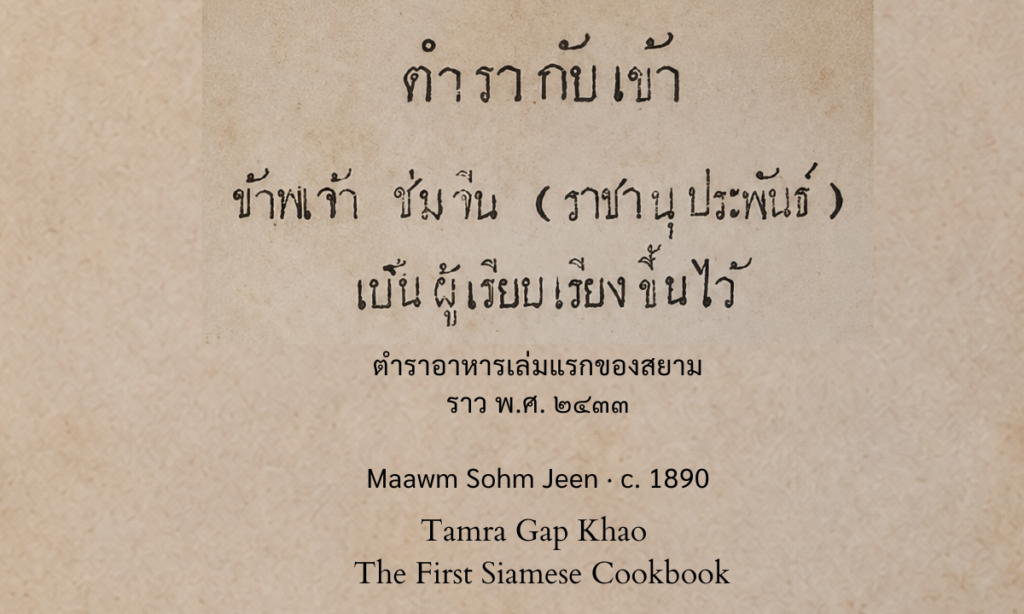
Tamra Gap Khao (ตำรากับเข้า) — The Manual for Food
Maawm Sohm Jeen (หม่อมซ่มจีน ราชานุประพันธุ์) | c. 1890 | The First Siamese Cookbook
Siamese Recipe Archive — Heritage Collection
The First Record and the First Cookbook
Maawm Sohm Jeen was born somewhere between 1857 and 1862, and she married Phraya Racha Noopraphan (พระยาราชานุประพันธุ์), the officer Nai Soot Jai Bunnag (นายสุดใจ บุนนาค) of King Rama V’s foreign ministry, which set her inside the Bunnag family and gave her the title-name the book carries. Bangkok knew her first as a musician. She sang Thayaae Saam Chan (ทะเเย ๓ ชั้น) onto a Gramophone disk, the first recording made by a Siamese artist.
Around 1890 she put a second first into circulation: a pamphlet of sixty-six pages, printed in a thousand copies by the Wacharin Press (โรงพิมพ์วัชรินทร์) on Fueang Nakhon Road (ถนนเฟื่องนคร) at Ban Mo (บ้านหม้อ). Tamra Gap Khao (ตำรากับเข้า), the Manual for Food, is the first Siamese cookbook.
How she came to the cooking she set down is not recorded. The book opens with no preface explaining her training or her aim, and no other account of her kitchen has been found. What survives is the record itself, and the record carries the portrait.
Introduction
Tamra Gap Khao (ตำรากับเข้า) carries the Rattanakosin Era year 107, which the archive reads as 1889 or 1890. One body of Siamese recipes reached print before it: the gastronomy column Bpaa Ga Sin (ปากะศิลป์), which Lady Plean Passakornrawong (ท่านผู้หญิงเปลี่ยน ภาสกรวงศ์) ran in 1889 in the magazine Bpradtithin Bat Laae Joht Maai Haeht (ประติทินบัตร แล จดหมายเหตุ). Those recipes appeared as a periodical column. Tamra Gap Khao is the earliest to appear as a cookbook, and it was set down roughly eighteen years ahead of the same writer’s Maae Khruaa Huaa Bpaa (แม่ครัวหัวป่าก์) of 1908.
The manual is built in two parts, a savory book and a sweet book. The recipes inside them follow one another as they came, with no sorting by technique or occasion and no chapter apparatus of the kind the later cookbooks would supply. The savory half names its dishes by type rather than by title — the plain curry, the spicy curry, the stir-fried curry and its sour form, the sour orange curry, the hot-and-sour type, the offal-and-blood curry — and two of its curry names carry a foreign hand, the massaman-type (แกงมาชะแมน) and the kari-type (แกงกะหลี่). The sweet half does name its dishes, grouped by the word each name leads with.
The book circulated quietly and was known to few. It never reached the standing of the Maae Khruaa Huaa Bpaa that came after it, and its relationship to the other Siamese culinary texts of the 1880s and 1890s is still largely unstudied.
Index of Recipes
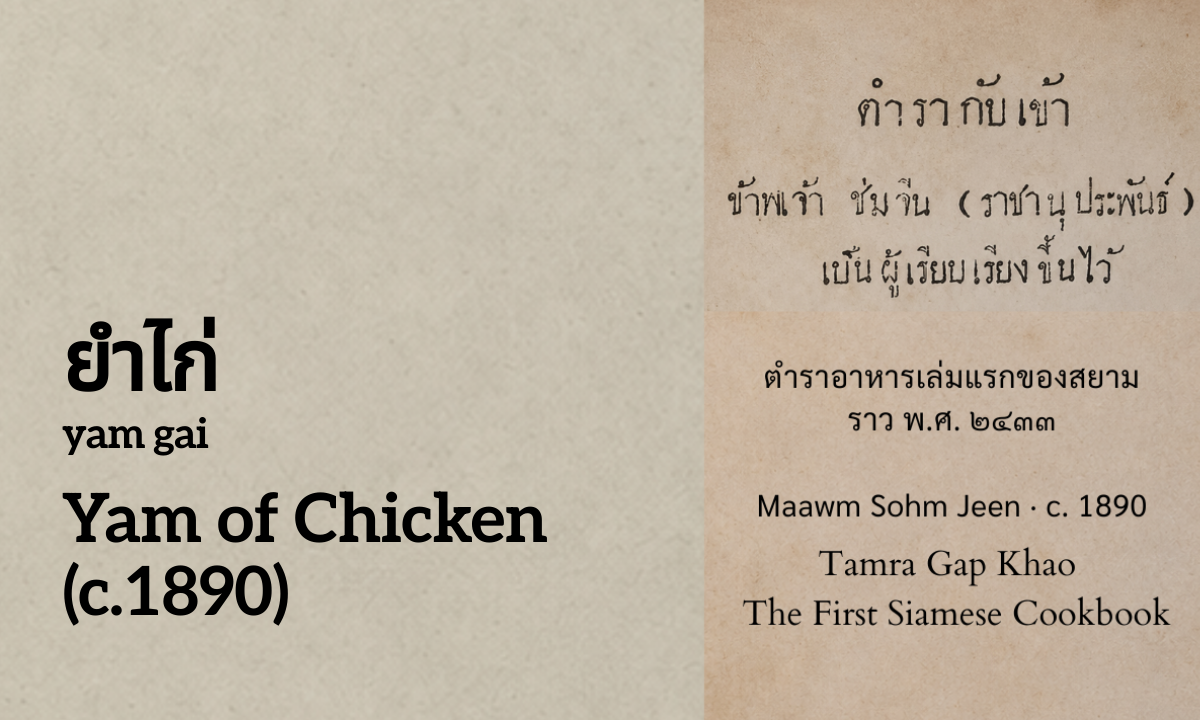
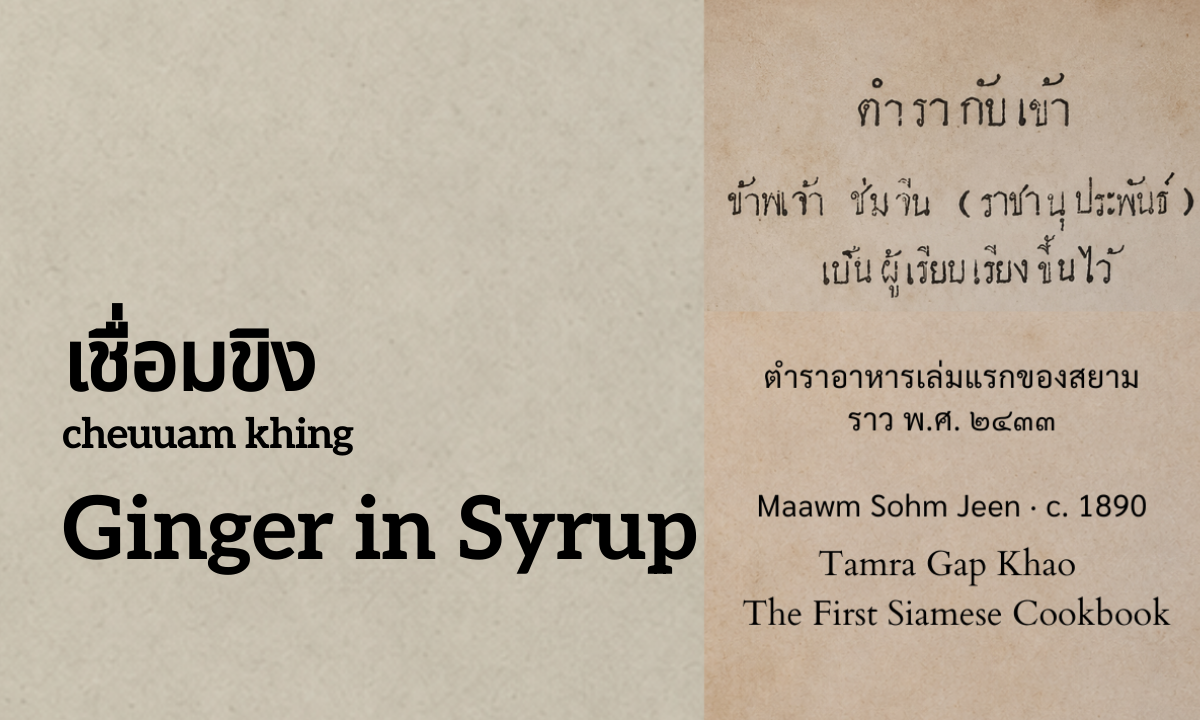
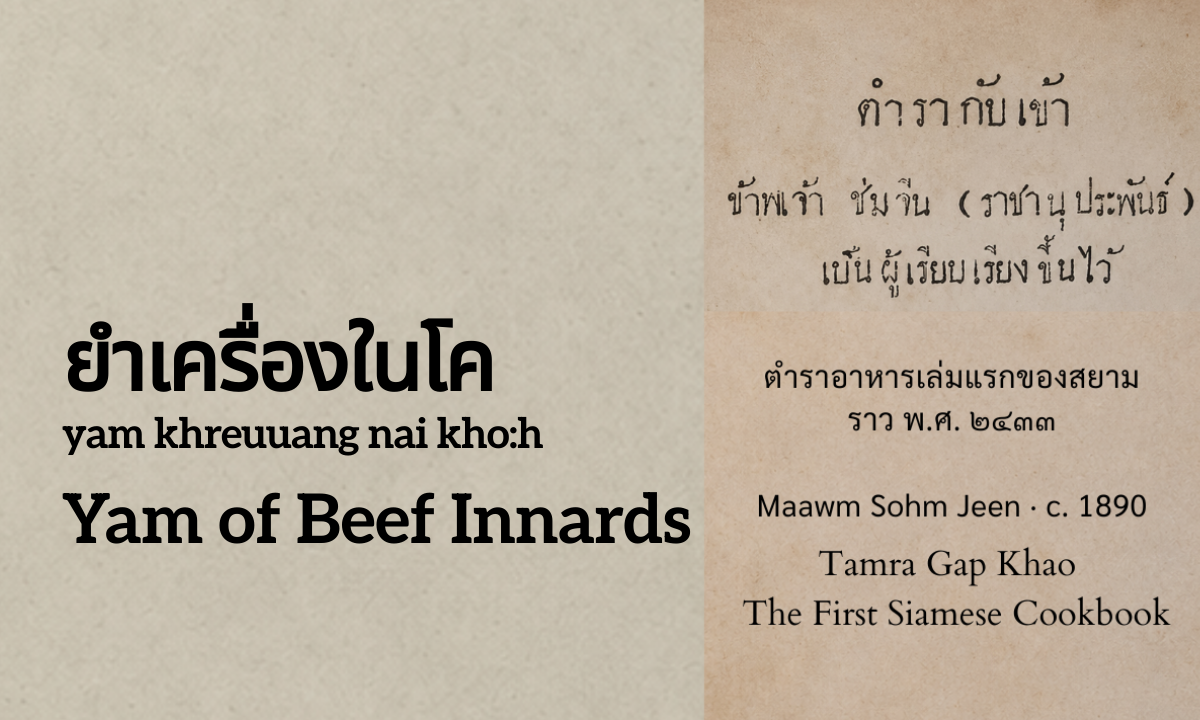
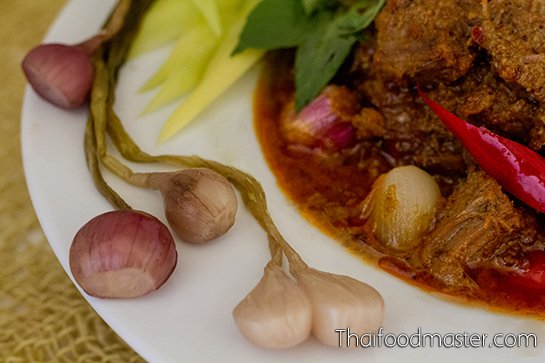
Breaking news: The oldest Thai cookbook, as well as history’s first-ever recorded recipe for Phanaeng curry, are revealed for the first time on Thaifoodmaster.com – A 126-year-old cookbook written by one of Siam’s most revered singers, Maawm Sohm Jeen (Raa Chaa Noopraphan) (หม่อมซ่มจีน, ราชานุประพันธุ์), has been rediscovered, offering a unique glimpse into the culinary repertoire of 19th-century Siam. In this chapter we examine the different forms of phanaeng curry from the 1800s to the present day, as we reconstruct the 19th-century version and craft step-by-step a traditional beef phanaeng curry.
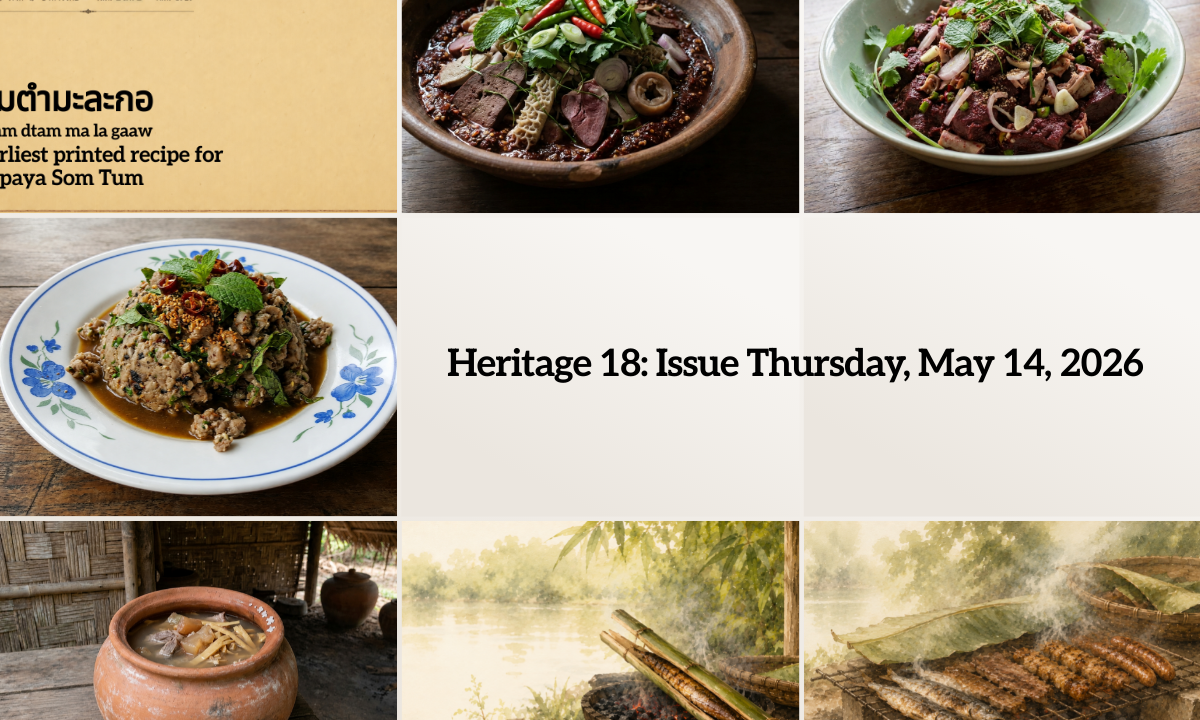
This week’s folios:
– ส้มตำมะละกอ — Earliest printed recipe for Papaya Som Tum (Nor.Sor.Hor.Dor, 1929)
– ลาบเลือดโคหรือสุกร อีกวิธี ๑ — Laap with Cow or Pig Blood, Another Method (Nor.Sor.Hor.Dor, 1929)
– ลาบเลือดโคหรือสุกร — Laap with Beef or Pork Blood (Nor.Sor.Hor.Dor, 1929)
– ลาบปลาดุกหรือไก่หรือเนื้อวัว — Laap of Catfish, Chicken, or Beef (Nor.Sor.Hor.Dor, 1929)
– วิธีเผาหัวสุกรป่า — Fire-Roasted Wild Boar Head Fermented with Bamboo Shoots and Salt (Nor.Sor.Hor.Dor, 1929)
– วิธีปิ้ง — Method of Grilling (bping) (Nor.Sor.Hor.Dor, 1929)
– ย่างปลา เนื้อสัตว์ต่างๆ และนกใหญ่ — Grilling Fish, Various Meats, and Large Birds (Nor.Sor.Hor.Dor, 1929)
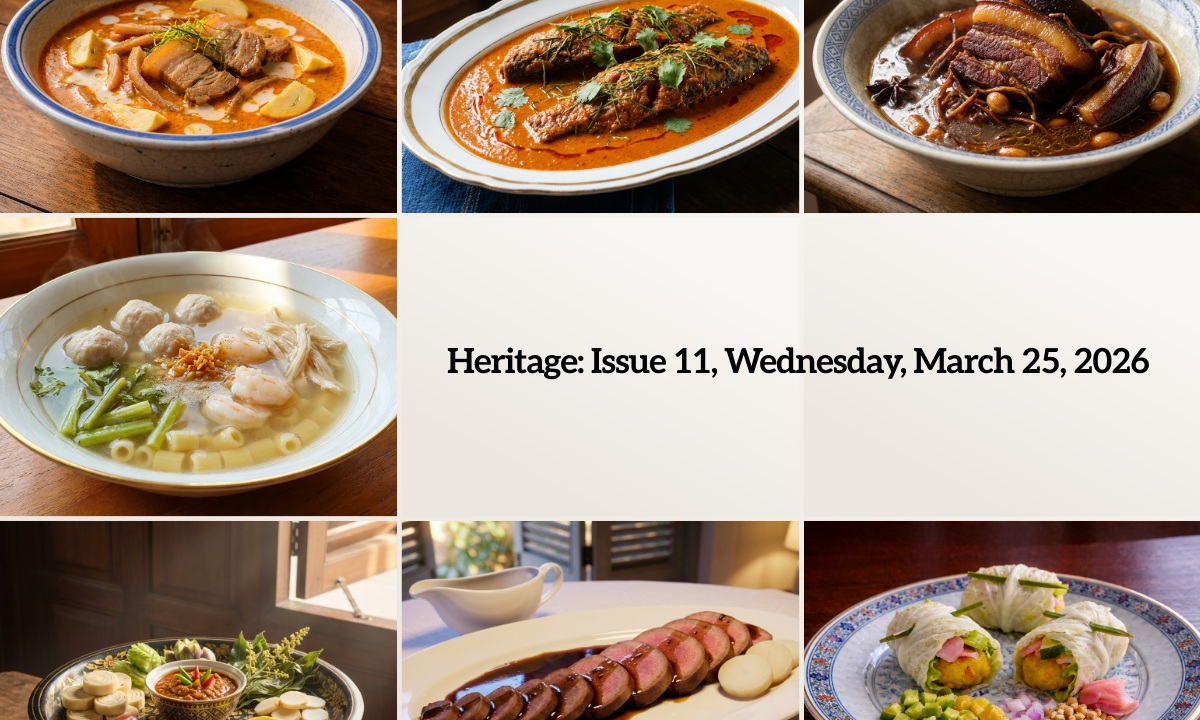
This week’s folios:
– แกงหมูบป่าระกำ — Wild Boar Curry with Salacca (Maawm Ying Soophaa, 1949)
– แกงฉู่ฉี่ปลาหมอ — Chuu Chee Curry with Climbing Perch (Jeeb Bunnag, 1933)
– แกงต้มหมูหอง — Slow-Braised Pork Belly with Chinese Daylily Flower (Jeeb Bunnag, 1933)
– แป้งหลอดอิตาเลียน — Italian Tube Pasta – Clear-Broth Macaroni with Pork Meatballs, Prawns & Shredded Chicken (Jeeb Bunnag, 1933)
– เครื่องจิ้ม – กะปิคั่ว — Roasted Shrimp Paste Relish (Jeeb Bunnag, 1933)
– ลิ้นอุสุราช — Cured Beef Tongue with Sauce Hussarde (Jeeb Bunnag, 1933)
– ส้มผักสด — Bite-Sized Fried Shrimp-Rice Cake Parcels Wrapped With Fresh Garnishes in Cabbage Leaves (Jeeb Bunnag, 1945)
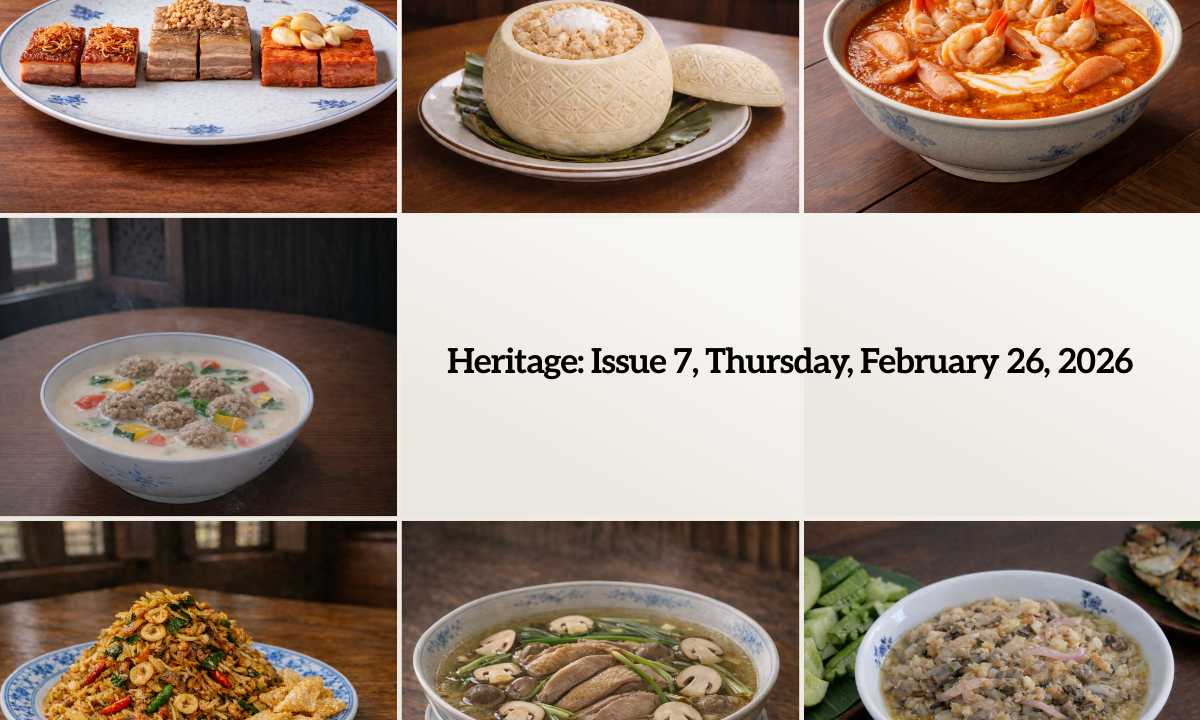
This week’s folios:
– สุกรสามวรรณ — Side Dish: Three-Style Pork (Jeeb Bunnag , 1933)
– ผะอบไก่เผือก — Chicken-Stuffed Taro (Jeeb Bunnag (Mrs. Samakkhanatthon) , 1945)
– แกงคั่วกุ้งกับกระท้อน — Santol and Shrimp Khua Curry (Jeeb Bunnag, 1933)
– แกงบะช่อเนื้อโคกะทิ — Beef Teochew Meatball and Pumpkin Coconut Curry (Jeeb Bunnag, 1933)
– ยำปลากรอบกับพริกเม็ดเล็ก — Spicy Salad with Crispy Fish and Bird’s Eye Chili (Jeeb Bunnag, 1933)
– แกงจืดเป็ดปะจิต อีกวิธี ๑ — Clear Duck Soup with Straw Mushrooms, Another Method (Jeeb Bunnag, 1933)
– หอยเสียบดองปรุง — Seasoned Pickled Razor Clam Relish (Jeeb Bunnag, 1933)

This week’s folios:
– แกงเผ็ดเป็ดเสวย — Royal Duck Spicy Curry (Gingganok Gaanjanaaphaa, 1935)
– แกงไก่กับมะเขือเทศ — Chicken and Tomato Curry (Jeeb Bunnag, 1933)
– บะหมี่สามรส — Three-Flavor Crispy Egg Noodles (Jeeb Bunnag, 1945)
– ยำหอยแมลงภู่ — Mussel Salad (Maawm Ying Soophaa, 1949)
– ผัดขิงบาทเบ็ด — Stir-Fried Ginger with Duck Feet (Jeeb Bunnag, 1933)
– ข้าวเกรียบสดวิเศษ — Extraordinary Fresh Rice Crackers (Gingganok Gaanjanaaphaa, 1935)
– ทองหยิบนานนึ่ง — Tin-Mold Fritters with Three Meats and Sesame-Plum Dip (Gingganok Gaanjanaaphaa , 1935)


