
Siamese Recipe Archive — Heritage Collection
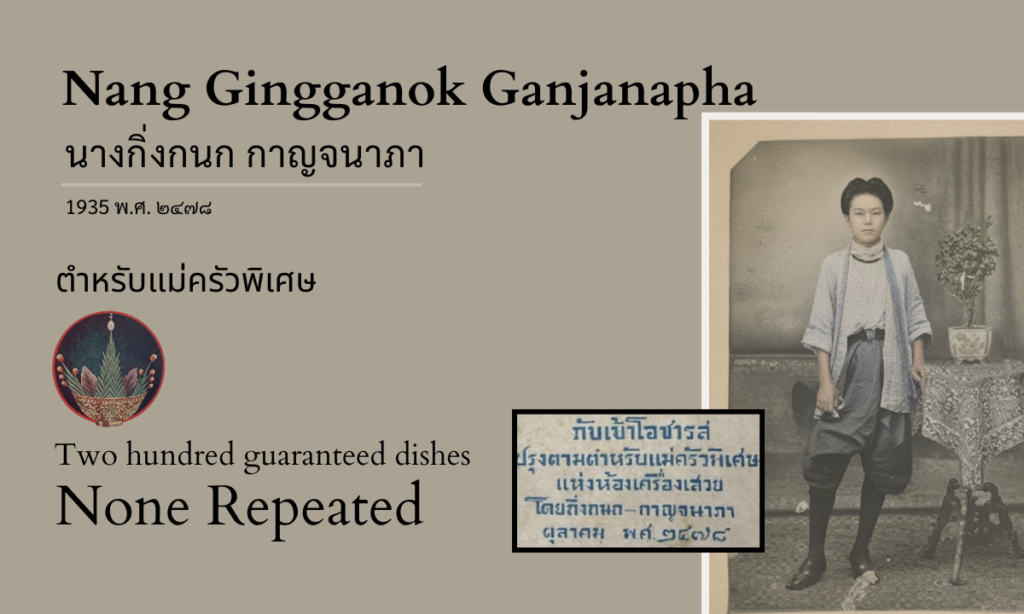
None Repeated
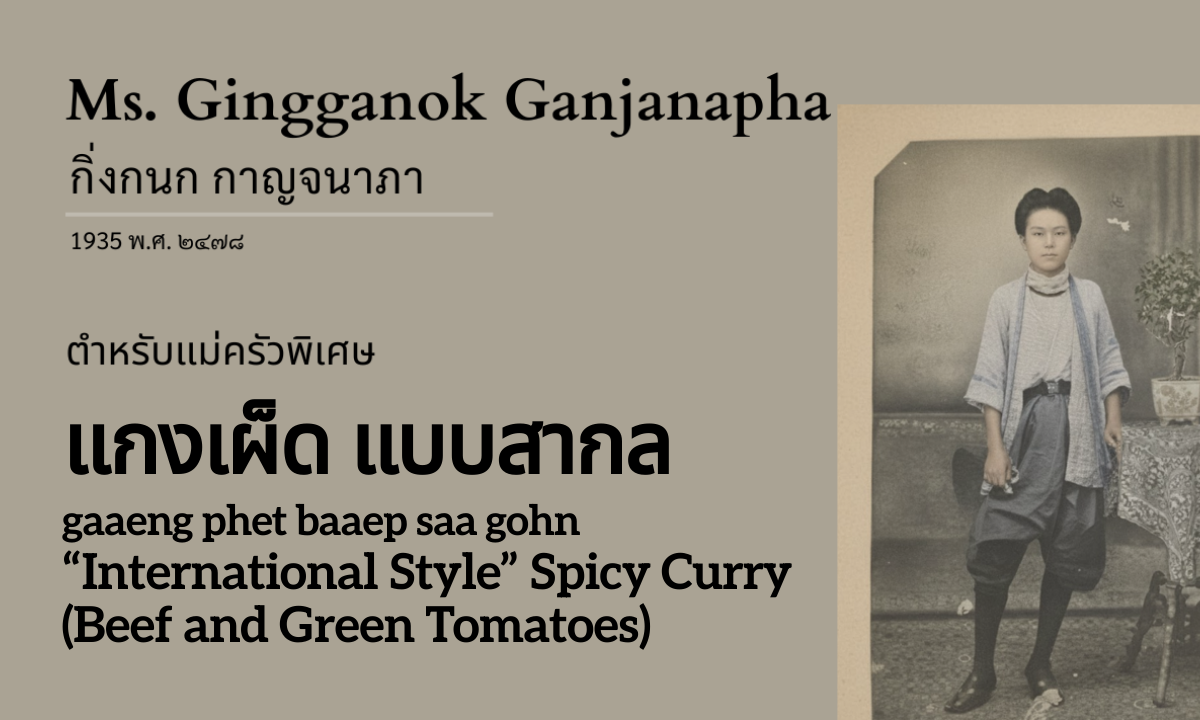
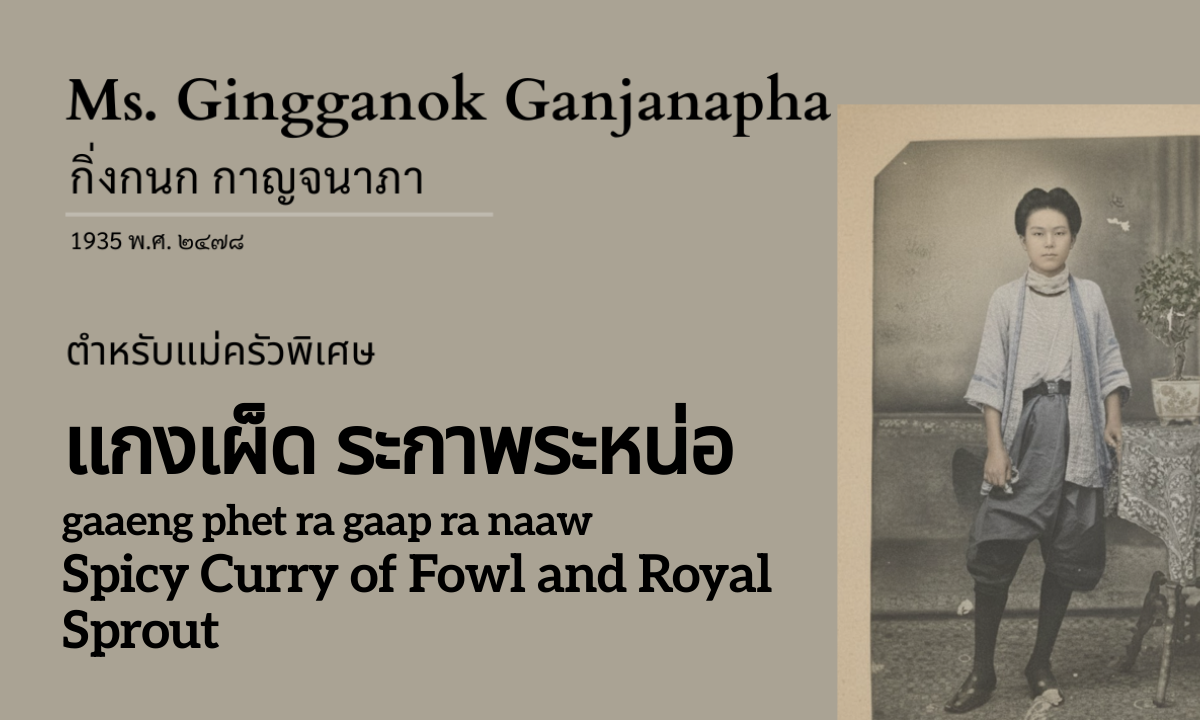
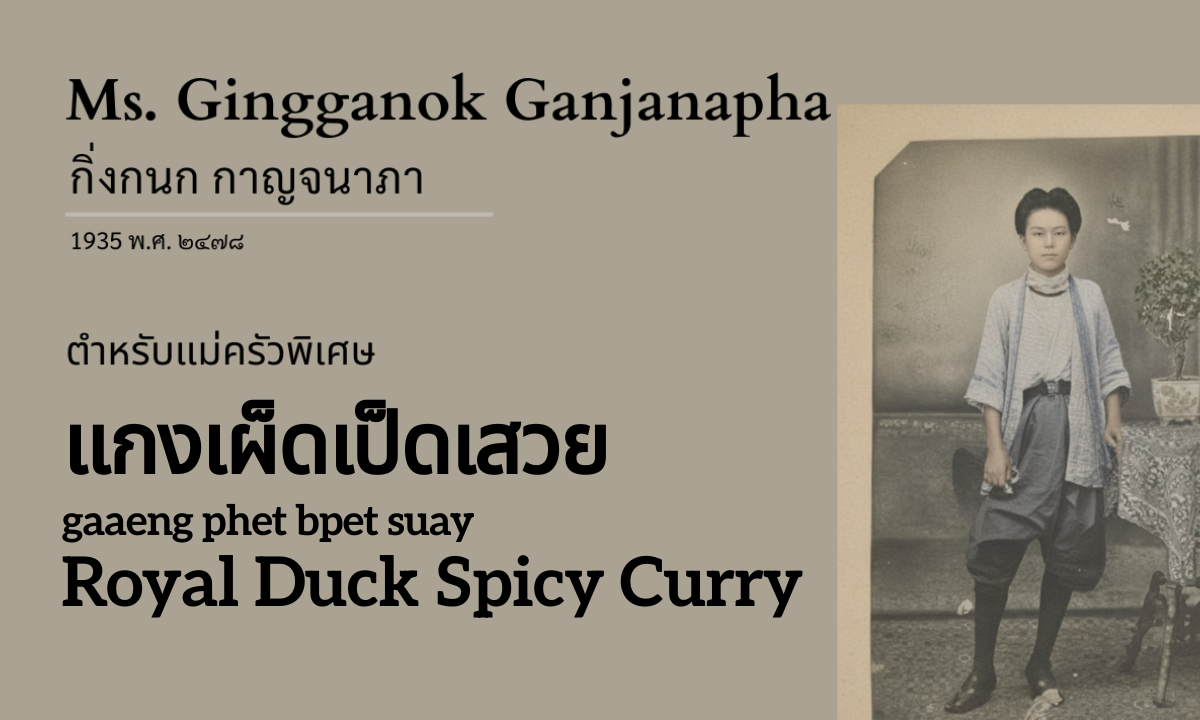
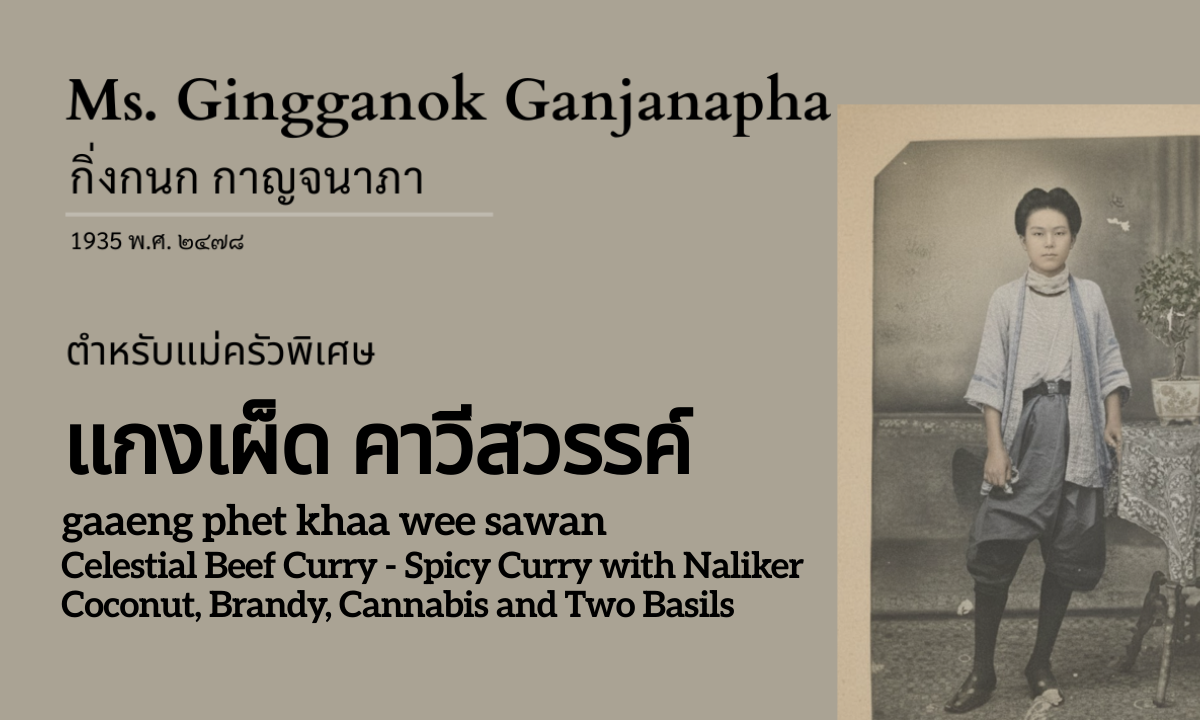
Nang Gingganok Gaanjanaaphaa (กิ่งกนก กาญจนาภา)
1935 (พ.ศ. ๒๔๗๘) | Royal Thai Cuisine
A Market Complaint
The title uses an archaic spelling—”เข้า” rather than the modern “ข้าว” for rice. “กับเข้า” means accompaniments for rice, the preparations that transform plain rice into a meal. “โอชารส” (o:h chaa rot) is used to express delight in the delectable flavor of a dish. It goes beyond a simple statement of the food being good; it is a celebration of its exquisite taste.
Gingganok Gaanjanaaphaa (กิ่งกนก กาญจนาภา) opens her 1935 (พ.ศ. ๒๔๗๘) cookbook with a complaint:
Even though the market is already overflowing with cookbooks, most are small books in the eight-section format, containing no more than a hundred dishes. This book copies that book, that book copies this one, back and forth—only the names change. Even if you buy two or three books, you only get the recipes of one. The buyer does not receive benefit according to their true wishes.
(แม้ในท้องตลาดจะมีตำรากับข้าวขายกันอยู่แล้วเกลื่อนกล่นก็จริง แต่โดยมากเป็นหนังสือขนาดเล็กถึงแปดแยก บรรจุกับข้าวไม่เกินร้อยอย่าง ทั้งเล่มโน้นซ้ำเล่มนี้ เล่มนี้ซ้ำเล่มนั้นอยู่ไปมา เปลี่ยนแต่ชื่อ แม้จะซื้อสักสองสามเล่ม ก็ได้รายชื่อกับข้าวแต่จำนวนเล่มเดียวนั่นเอง ซึ่งผู้ซื้อย่อมไม่ได้ประโยชน์สมความปรารถนาอันแท้จริง)
Her solution was consolidation. She gathered recipes from the special cooks of the royal kitchen (แม่ครัวพิเศษแห่งห้องเครื่องเสวย)—women with established reputations in palace culinary service—and assembled them into a single comprehensive volume: over two hundred preparations, none repeated.
I have compiled recipes from famous royal kitchen staff into this volume, containing over two hundred dishes, and I guarantee none are duplicated. You buy this one book, and it may serve you better than all the others.
ข้าพเจ้าจึงได้รวบรวมกับข้าวจากตำหรับของแม่ครัวที่มีชื่อเสียง สามารถบรรจุกับข้าวได้สองร้อยกว่าอย่าง และรับรองว่าไม่ซ้ำกันในตัวเลย ท่านซื้อตำราเพียงเล่มเดียว อาจคุ้มตำราเล่มอื่นๆ เสียได้เป็นอย่างดี)
Three Women
The book’s postscript names three women who contributed to the compilation: Khun Praphai (คุณประไพ), Khun Jira (คุณจิรา), and Khun Noi (คุณน้อย). Gingganok thanks them for their substantial help and acknowledges that some recipes came from these collaborators—preparations “beyond her own ability to find.” The cookbook is therefore a collaborative document, drawing on multiple sources of knowledge. Who these three women were, and what their relationship to royal kitchen practice may have been, the text does not specify.
Hua Hin, July 1935 (กรกฎาคม พ.ศ. ๒๔๗๘)
Gingganok wrote from a seaside house in Hua Hin (หัวหิน), completing the manuscript on July 24, 1935 (๒๔ กรกฎาคม พ.ศ. ๒๔๗๘). The book appeared in print that October (ตุลาคม พ.ศ. ๒๔๗๘), published by Akson Charoen That Printing House (โรงพิมพ์อักษรเจริญทัศน์), also known as Heng Hua Hong (เฮงฮั่วฮง), near Choeng Saphan Lao Ching Cha (เชิงสะพานเล่าชิงช้า) in Phra Nakhon (พระนคร), priced at three baht (๓ บาท). The owner listed on the publication page is Nai Lek Techawikay (นายเล็ก เตชวิกัย)—likely the publisher or financial backer rather than the author.
The Hua Hin (หัวหิน) detail is worth noting. By 1935 (พ.ศ. ๒๔๗๘), Hua Hin had been a royal retreat for decades, a place where Bangkok’s elite built seaside homes. That Gingganok wrote there, and mentions it specifically, suggests her social position—someone with the leisure and means for extended stays at a fashionable resort town. She acknowledges writing “during a time of rest,” yet maintains the work will serve housewives according to their circumstances.
Palace to Kitchen
The book closes with a section Gingganok describes as particularly suited to the housewife (แม่เรือน)—the woman who manages a household. These are composed menus, dishes organized into complementary sets. This pedagogical choice suggests an intended audience: women responsible for daily meal planning who needed guidance on what preparations work together.
The bulk of the collection, however, draws from professional palace cooking. The tension between these two orientations—high court cuisine and domestic application—runs through the project. Gingganok gathered recipes from trained specialists and presented them for household use.
Silences
No biographical record of Gingganok Gaanjanaaphaa (กิ่งกนก กาญจนาภา) beyond this text has been located. The specific royal kitchen staff whose recipes appear in the collection are not named. The three collaborators receive thanks but no further identification. The book presents itself as a transmission from palace practice to domestic kitchen, but the chain of transmission—who taught whom, which recipes came from which source—remains undocumented.
Two Hundred Preparations
What survives is the collection itself: over two hundred preparations representing what Gingganok and her collaborators understood as royal kitchen cooking in the mid-1930s (พ.ศ. ๒๔๗๐). The recipes document technique, proportion, and method as these women knew them. Whatever biographical questions remain open, the cooking knowledge is present on the page.
About This Edition
Thaifoodmaster presents Exquisite Accompaniments for Rice (กับเข้าโอชารส) with original Thai text and English translation. Recipe measurements have been converted for contemporary use while preserving the proportional relationships Gingganok recorded. The set menu section, which Gingganok considered essential for household application, appears as she organized it.
The Recipe Archive


About the Siamese Recipe Archive
The Heritage project preserves pre-1950s Thai culinary manuscripts—translating, contextualizing, and making accessible the recorded knowledge of Siamese cooks before it disappears entirely.
The project is led by Hanuman Aspler, founder of Thaifoodmaster, who has spent over three decades studying ancient Siamese manuscripts and developing a methodology for understanding Thai cuisine as a language with its own grammar and syntax. The archive provides primary sources for learning this culinary language—not recipes to follow, but grammar to internalize.

The life of Mrs. Samaknantapol (Jeeb Bunnag) (นางสมรรคนันทพล (จีบ บุนนาค)) offers a direct view into the transmission of Thai culinary knowledge across a century of change. Her teaching, writing, and documentation preserved the structures of palace cuisine while shaping methods that could be studied and applied in classrooms throughout modern Bangkok.
Her 1933 work Samrub Raawp Bpee (สำรับรอบปี) remains an unparalleled record: 365 complete Samrub, old style Siamese meal sets, arranged with precision, reflecting daily rhythms of eating that were already disappearing from common practice. Through her work, we can study not only individual dishes but also the organization of meals and the cultural reasoning that guided them.
As someone who follows her teaching, I approach this story with both historical and practical attention. Her writing has informed my own study of Thai cuisine, and years of cooking from her instructions have shown me the clarity and discipline of her teaching. This account presents her life within its contexts—family, education, print culture, and the evolving society of twentieth-century Siam—while also acknowledging how her work continues to guide readers today.
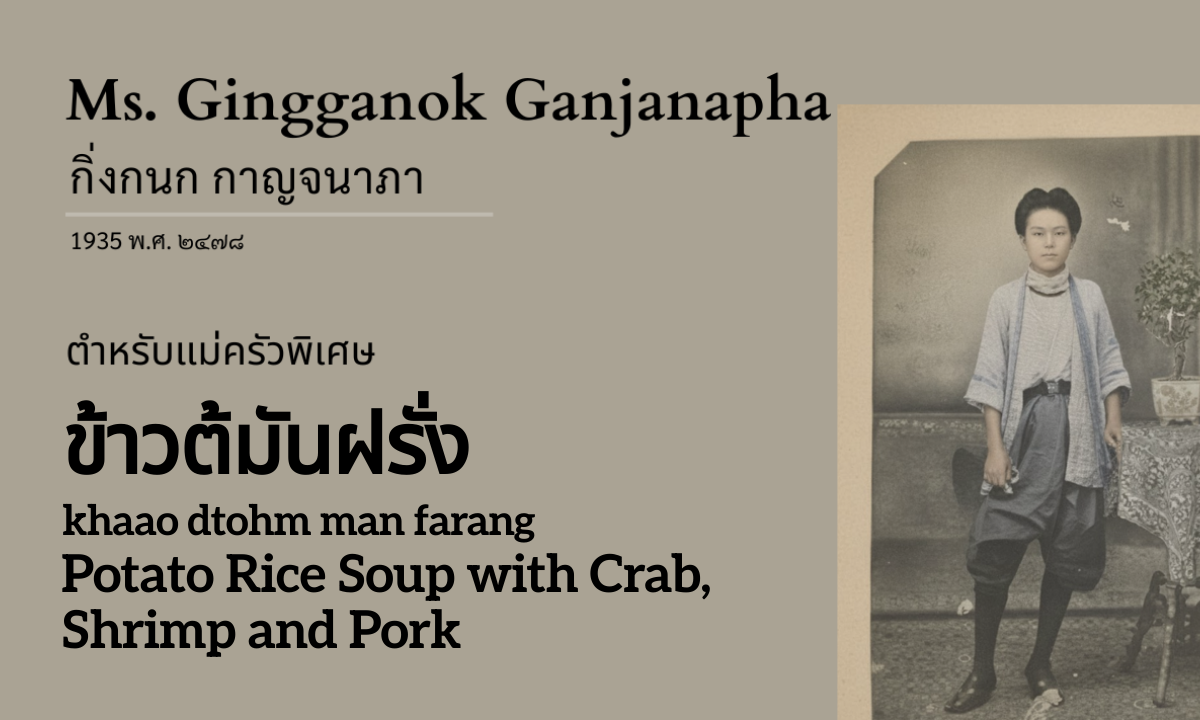
Potato Khao dtohm Rice Soup, featuring a clear seafood broth with pork meatballs, served with crispy fried potatoes on the side. From Gingganok’s ‘Delicious Side Dishes,’ 1935.
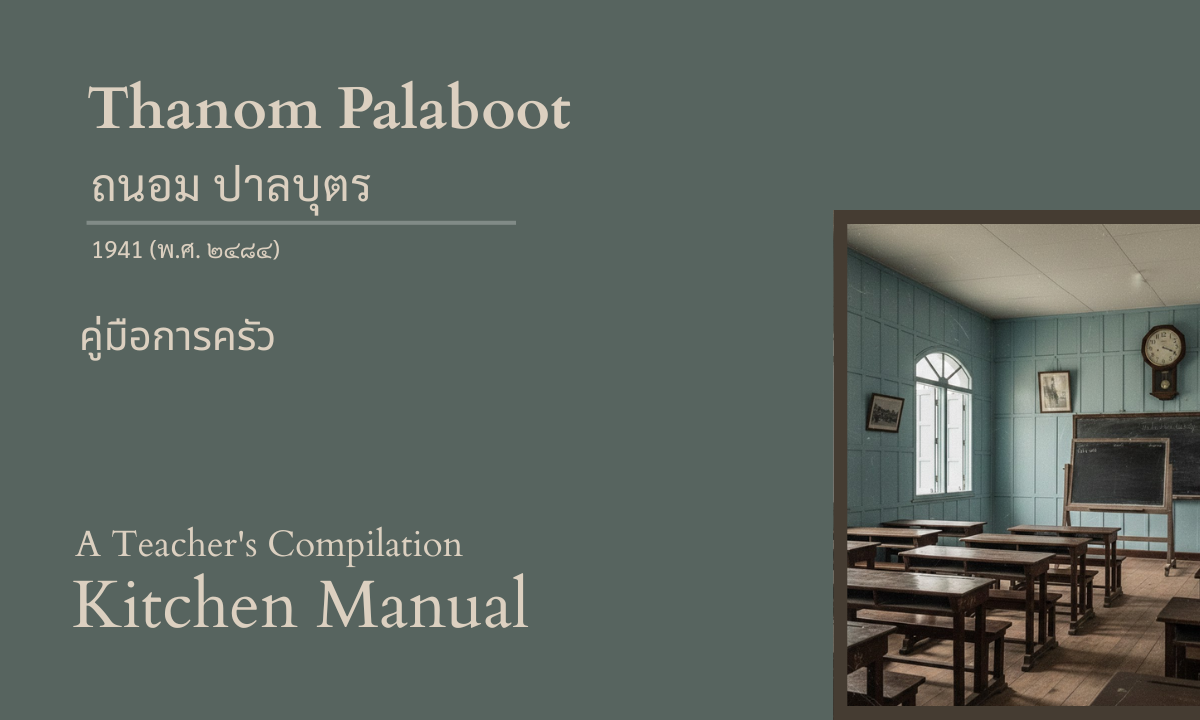
Thanom Palaboot (ถนอม ปาลบุตร) was a teacher at the Girls’ School (โรงเรียนสตรี) in Maha Sarakham Province (จังหวัดมหาสารคาม) when she compiled this four-volume kitchen manual (คู่มือการครัว) in May 1941 (พฤษภาคม พ.ศ. ๒๔๘๔). She wrote from the northeastern region (ภาคอีสาน), far from Bangkok (กรุงเทพฯ), producing a work intended for practical household instruction.
She had researched and compiled cooking recipes (ตำราปรุงอาหาร), organizing them into categories as a household manual for her own use. Friends and fellow teachers (เพื่อนครู) urged her to publish, and she undertook further research to meet their expectations. Her sources were multiple: teachers and professors (ครูและอาจารย์), textbooks (ตำรา), explanations from those with expertise (ผู้ชำนาญ), and friends who shared her interest in cooking.
The series totals approximately 800 recipes across four volumes covering curries (แกง), salads (ยำ), stir-fries (ผัด), fried dishes (ทอด), dipping sauces (เครื่องจิ้ม), side dishes (เครื่องเคียง), snacks (ของว่าง), sweets (ของหวาน), and beverages (เครื่องดื่ม).
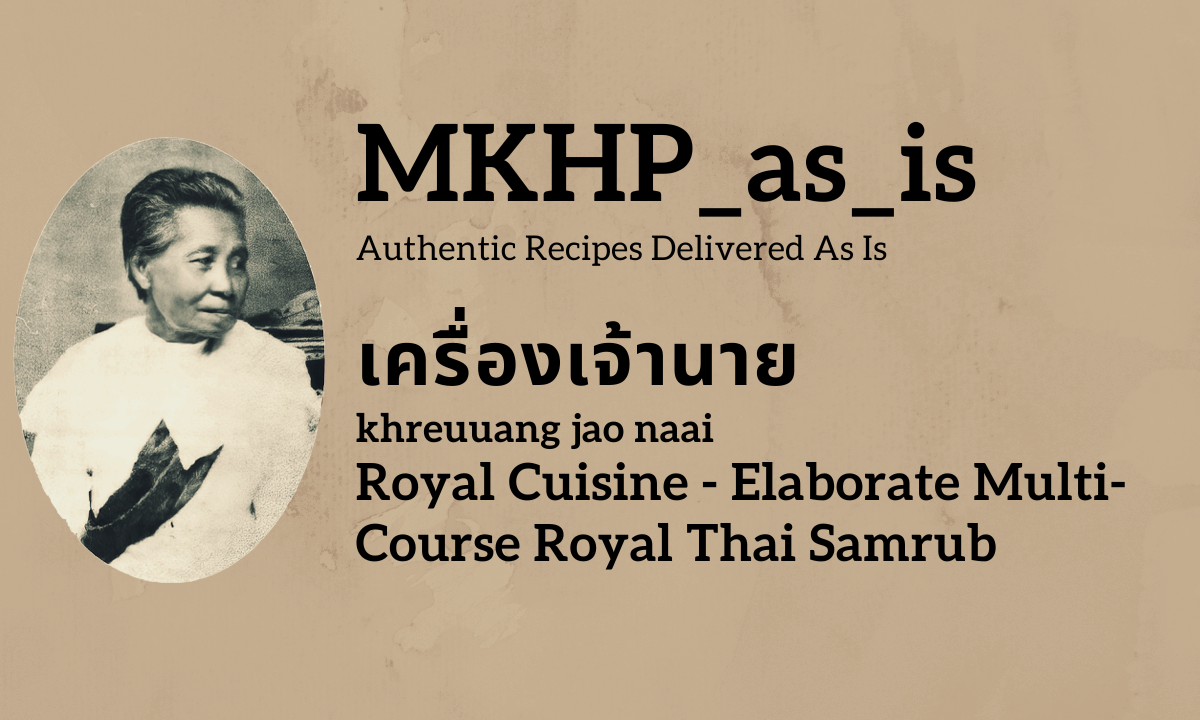
Elaborate Multi-Course Royal Thai Samrub
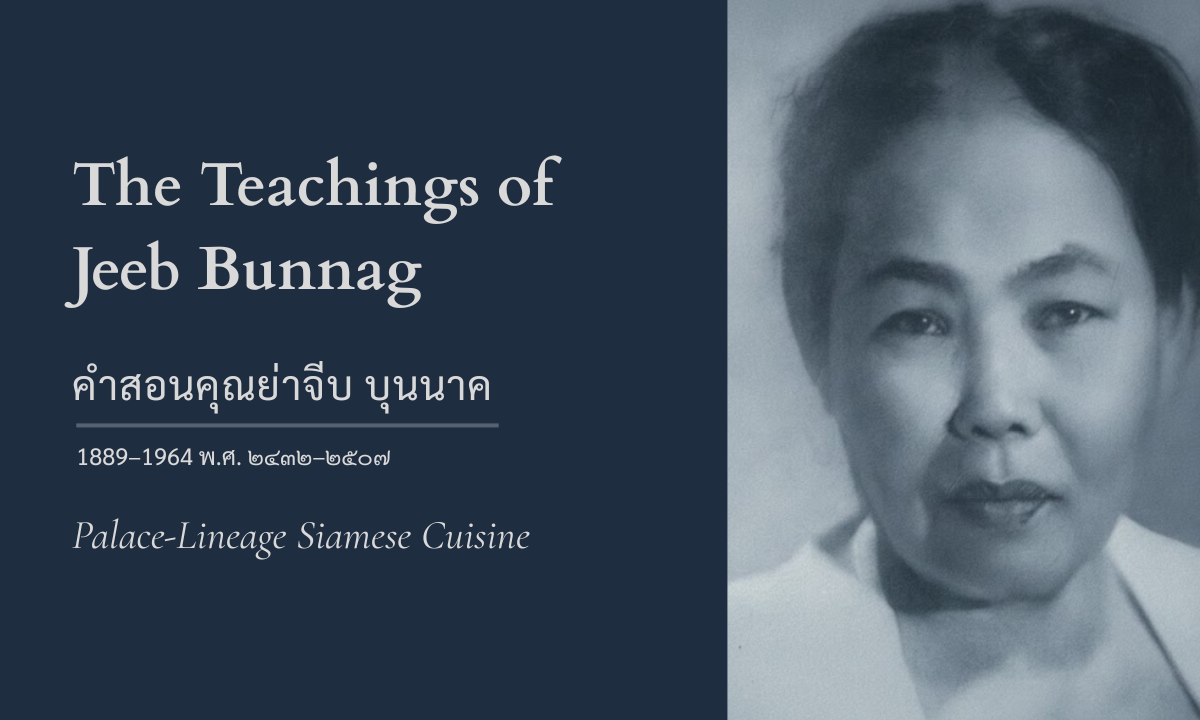
In 1929, fire destroyed her home in Bang Krabue—manuscripts, possessions, the material inheritance of generations. What survived was knowledge. Trained by Lady Plean Passakornrawong in the palace kitchens, she carried a culinary tradition that could not burn. Four years later, she began publishing. She signed her books with her actual address so anyone could write to her.
This archive gathers recipes from across her publications, spanning four decades from her 1933 Samrub Raawp Bpee (สำรับรอบปี) to works published after her death in 1964. Each preparation carries her teaching method—tested instructions, structural logic preserved, substitutions provided for those with dietary restrictions. Palace technique made accessible. Court cuisine adapted for household kitchens. The grammar of Siamese cooking recorded by someone who carried it by birthright and gave it away through teaching.


