
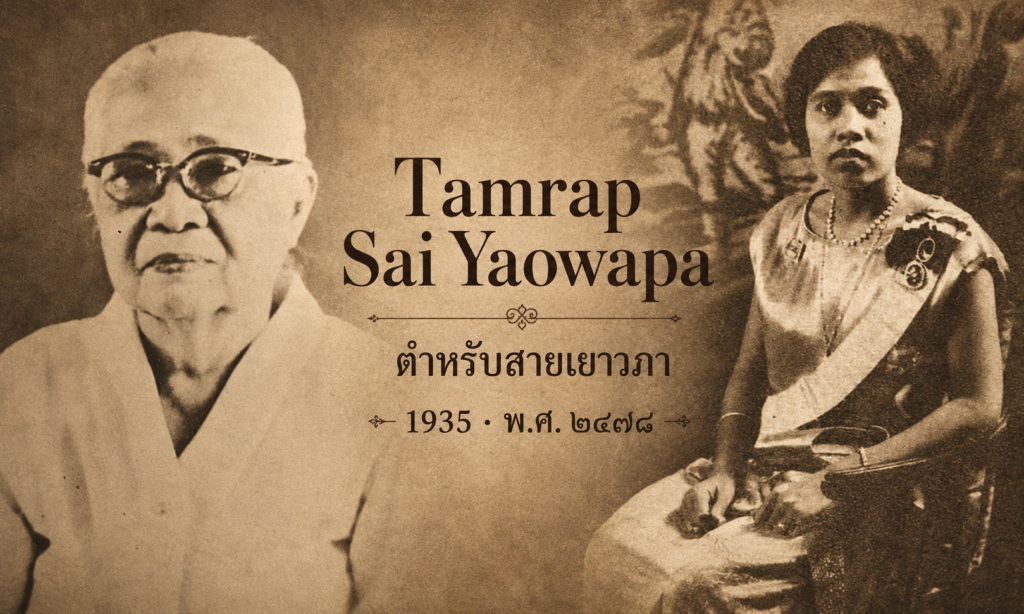
Tamrap Sai Yaowapa (ตำหรับสายเยาวภา)
M.R. Tuang Sanitwong (ม.ร.ว.เตื้อง สนิทวงศ์) | 1935 | Royal Siamese Cooking and Food for the Sick
Siamese Recipe Archive — Heritage Collection
Tamrap Sai Yaowapa (ตำหรับสายเยาวภา) was published in 1935 as the cremation volume of Princess Yaovabha Bongsanid (พระเจ้าบรมวงศ์เธอ พระองค์เจ้าเยาวภาพงศ์สนิท, 1884–1934), a daughter of King Chulalongkorn. Prince Chainat Narenthon (กรมขุนชัยนาทนเรนทร) bestowed the book’s name and said it would stand as an important treatise of benefit to students thereafter.
The volume holds 195 recipes together with chapters on the meaning of cooking terms, seasonings and ingredients, the arrangement of food, livestock and game meats, fish, vegetables, the cleaning of meats, household meal plans, and a treatise on eggs. Four further chapters set out what the book calls kitchen science (วิทยาศาสตร์การครัว): the classification of foods, animal foods, plant foods, and the pungent foods, seasonings and oils.
The recipes hold the Siamese royal kitchen of the 1930s at the moment Western and Chinese methods were entering it. A clear stock simmered two hours and strained to keep as a base. Beef and shallots sealed in a lidded pot and cooked six hours over a double boiler, recorded as American Soup (ซุบอเมริกัน; soop a maeh ri gan). Sago pearls boiled into chicken broth until clear. A family of sandwiches and composed savories sits alongside the curries, the yam, the nam phrik and the miang.
Measurements appear as the contributors wrote them, in the household units of the period. Many recipes give no quantities at all. The archive preserves those silences as they stand.
Cooking for the Sick
The Princess was often unwell as a child. King Chulalongkorn had her brought to live at the palace of Prince Sai Sanitwong (พระองค์เจ้าสายสนิทวงศ์) at Pomprap Sattruphai (ป้อมปราบศัตรูพ่าย) beside Krung Kasem Road (ถนนกรุงเกษม), on the ground where Saipanya School stands today. Prince Sai was the King’s personal physician and head of the department of royal physicians (กรมหมอหลวง), and her grandfather.
There her grandmother M.C. Kaesorn Sanitwong (หม่อมเจ้าหญิงเกษร สนิทวงศ์), known as Khrok Tao (ครอกเต่า), gave care to grandfather and granddaughter alike by preparing meals from ingredients whose properties suited the strengthening of the body, some of which served as medicine in themselves. The Princess saw the results of that care and took up the practice herself. When a royal relative fell ill she prepared food in her grandfather’s manner, at times adapting a dish by her own design, and presented it again and again at table. The preface records that this made her beloved among the senior royal relatives.
She traveled by water with Prince Sai to the South and to the North on several occasions. The preface credits those journeys with the disposition of kindness she showed to the people she met.
The Book and Its Makers
The compilation was collective work with named hands. M.R. Tuang Sanitwong received the incoming recipes and gathered them. M.L. Tiu Chonlamakphichan (ม.ล. ติ๋ว ชลมารคพิจารณ์) and Khunying Sihasak Sanitwong (คุณหญิงสีหศักดิ์ สนิทวงศ์) sorted the dishes by category and kind, wrote the explanations of technique and handwork by which food is arranged and prepared correctly, and described the various ingredients used in cooking. Mom Sanitwong Seni (หม่อมสนิทวงศ์เสนีย์), M.R. Tan Sanitwong (ม.ร.ว. ตัน สนิทวงศ์), wrote the detailed technical account of the properties of those ingredients.
Phraya Sihasak Sanitwong signed the preface on 17 May 1935 (พ.ศ. ๒๔๗๘) and dedicated the merit of the book to the Princess, recalling the regard in which Queen Savang Vadhana (สมเด็จพระศรีสวรินทราบรมราชเทวี พระพันวัสสา) had held her from her youth to the end of her life.
The 195 recipes are grouped by dish family:
- Soups and clear broths
- Curries
- Grilled, roasted and baked dishes
- Stir-fries
- Yam, koi, phla and salads
- Nam phrik, lohn and relishes
- Miang and wrapped bites
- Sandwiches and composed savories
- Rice dishes
- Noodles
- Egg cookery
- Sweets and desserts
- Preserved, pickled and set dishes
- Other dishes
The reference chapters follow: the meaning of cooking terms, important things to know, seasonings and ingredients, miscellany, arranging food, livestock and game meats, fish, vegetables, the cleaning of meats, kitchen science in four parts, household meal plans, and the treatise on eggs.
Index of Recipes

About the Siamese Recipe Archive
The Siamese Recipe Archive holds Thai culinary manuscripts as primary historical evidence. Every recipe is published with the original Thai text beside a direct translation, with period units and the contributors’ own spellings carried through as written. Where a manuscript omits a quantity or a step, the omission is preserved and marked as an omission.
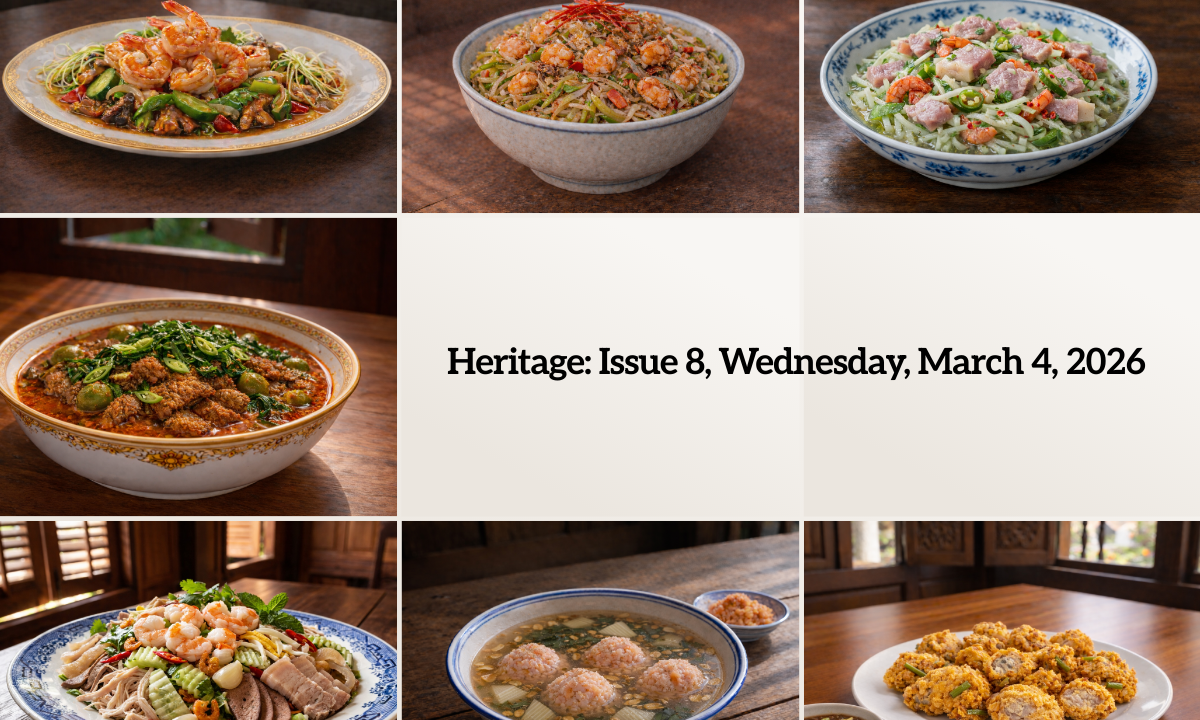
This week’s folios:
– แกงเผ็ด คาวีสวรรค์ — Celestial Beef Curry (กิ่งกนก กาญจนาภา, 1935)
– แกงลูกชิ้นกุ้ง — Shrimp Ball Clear Soup (Jeeb Bunnag, 1933)
– เครื่องในไก่กรอบ — Side-Dish: Crispy Chicken Offal (Jeeb Bunnag , 1933)
– ผัดเปรี้ยวหวานนางกุ้ง — Sweet and Sour Stir-Fried Giant Female Freshwater Prawn (Jeeb Bunnag, 1933)
– ยำ โกไลพิเศษ — Yam “Goliath Special” (Gingganok Gaanjanaaphaa, 1935)
– ยำ ไวโอเล็ต — “Violet” Yam Salad with Cucumber, Pork and Dried Shrimp (Gingganok Gaanjanaaphaa, 1935)
– เยื่อเคยทรงเครื่อง — Side dish: Dressed Fermented Shrimp Paste (Jeeb Bunnag, 1933)
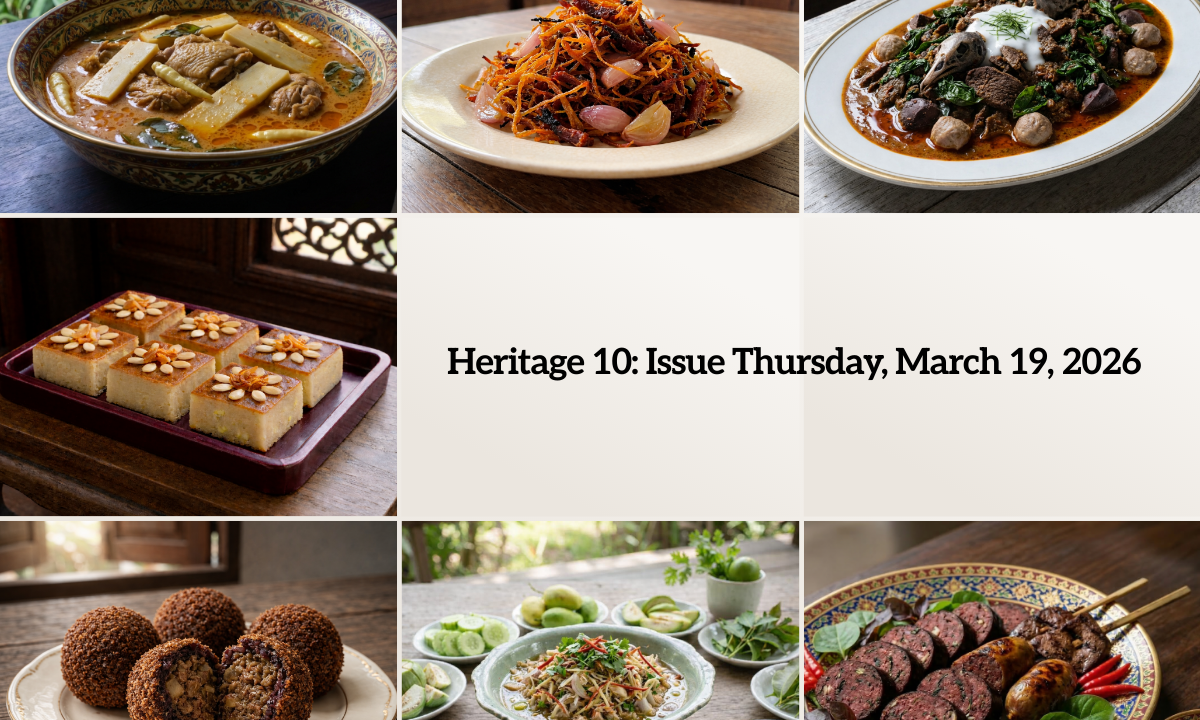
This week’s folios:
– แกงเผ็ด ระกาพระหน่อ — Spicy Curry of Fowl and Royal Sprout (Gingganok Gaanjanaaphaa, 1935)
– ผัดเนื้อกะทิ — Stir-Fried Salted Beef with Coconut Cream (Jeeb Bunnag, 1933)
– แกงเผ็ดนกเขาไฟ — Fiery Red Collared Dove Curry with Two Basils (Jeeb Bunnag (จีบ บุนนาค) (Mrs. Samakkhanatthon) (นาง สมรรคนันทล), 1933)
– ขนมกุมภแกงถั่ว — Baked Coconut and Mung Bean Custard (Jeeb Bunnag, 1933)
– ข้าวเหนียวนางละเวง — Nang Laweng Sticky Rice (Gingganok Gaanjanaaphaa, 1935)
– ปลาแดงทรงเครื่อง — Red Pickled Anchovies with Seasonings (Jeeb Bunnag, 1933)
– ไส้กรอกเลือดสุกร — Grilled Pork Blood Sausage (Jeeb Bunnag, 1933)

This week’s folios:
– แกงเผ็ดเป็ดเสวย — Royal Duck Spicy Curry (Gingganok Gaanjanaaphaa, 1935)
– แกงไก่กับมะเขือเทศ — Chicken and Tomato Curry (Jeeb Bunnag, 1933)
– บะหมี่สามรส — Three-Flavor Crispy Egg Noodles (Jeeb Bunnag, 1945)
– ยำหอยแมลงภู่ — Mussel Salad (Maawm Ying Soophaa, 1949)
– ผัดขิงบาทเบ็ด — Stir-Fried Ginger with Duck Feet (Jeeb Bunnag, 1933)
– ข้าวเกรียบสดวิเศษ — Extraordinary Fresh Rice Crackers (Gingganok Gaanjanaaphaa, 1935)
– ทองหยิบนานนึ่ง — Tin-Mold Fritters with Three Meats and Sesame-Plum Dip (Gingganok Gaanjanaaphaa , 1935)
This week’s folios:
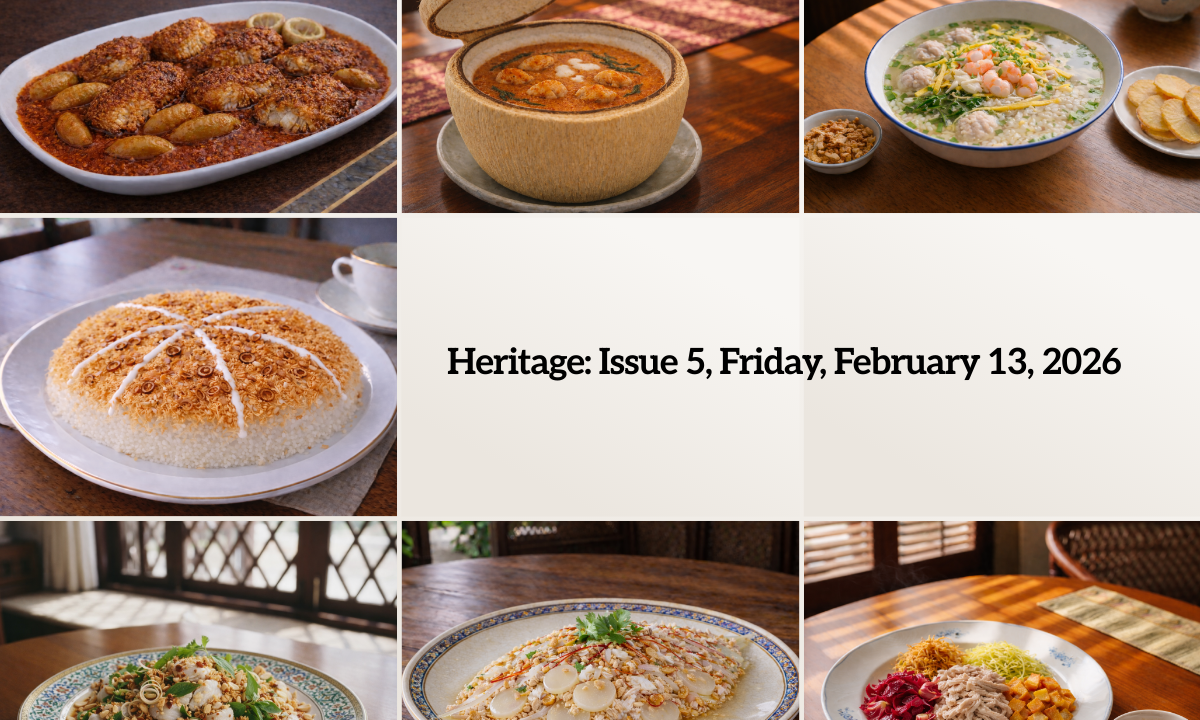
– แกงปลาช่อนมะดันดอง — Snakehead Fish Curry with Pickled Madan and Kaffir Lime (Maawm Ying Soophaa, 1949)
– ห่อหมกไก่มะพร้าวอ่อน — Chicken Curry Steamed in Young Coconut (Gingganok Gaanjanaaphaa, 1948)
– ข้าวต้มันฝรั่ง — Potato Rice Soup with Pork, Shrimp and Crab (Gingganok Gaanjanaaphaa, 1935)
– ข้าวเหนียวหน้าปลาทอง — Sticky Rice with Golden Fish Topping (Jeeb Bunnak, 1945)
– ยำมัจฉาสวรรค์ — Celestial Fish Salad (Maawm Ying Soophaa, 1949)
– ยำแห้วจีน — Chinese Water Chestnut Salad (Jeeb Bunnag, 1933)
– ยำผลกระเจี๊ยบเสวย — Royal-Style Roselle Bud Salad (Maawm Ying Soophaa, 1949)
This week’s folios:
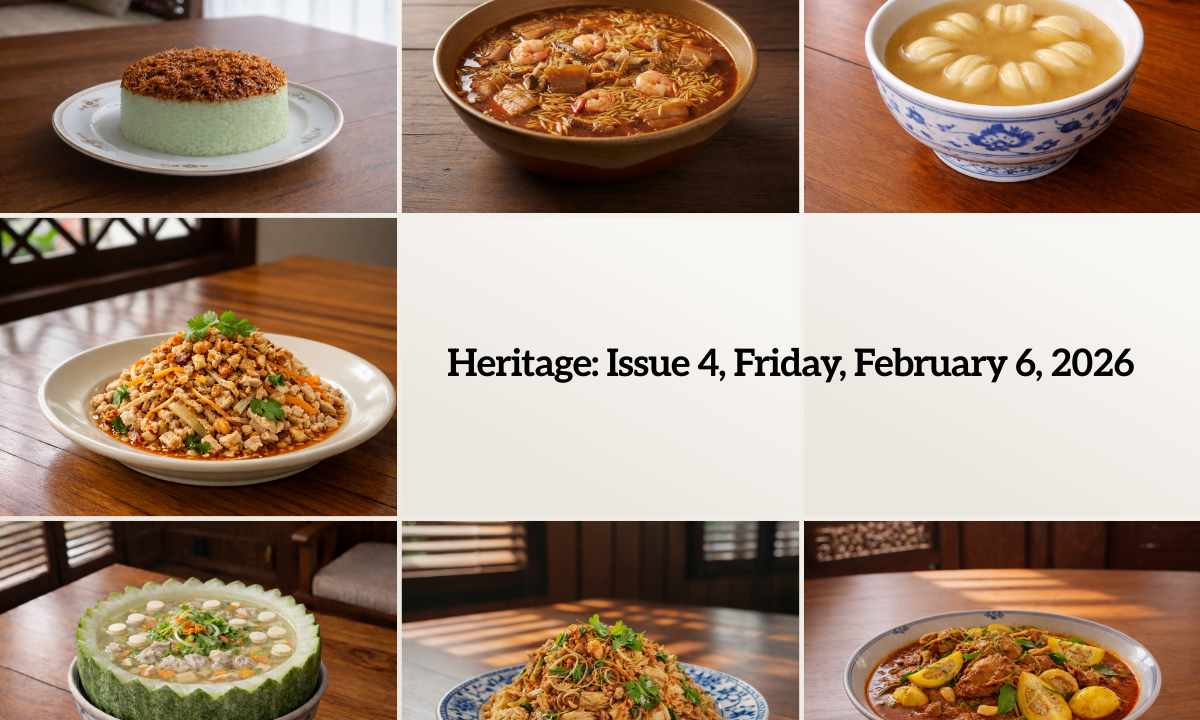
– ข้าวเหนียวนึ่งหน้าเนื้อ — Steamed Gelatinous Rice with Beef Topping (Jeeb Bunnak, 1945)
– แกงพวงพยอม — Shorea Flower Curry (Maawm Ying Soopha, 1949)
– ลูกรอกไส้ไก่ — Egg Sausage in Chicken Intestine (Jeeb Bunnag, 1933)
– ยำผิวส้มจีน — Mandarine Orange Peel Salad (Maawm Ying Soophaa, 1949)
– แกงจืดฟักเขียวตุ๋น — Steamed Stuffed Winter Melon Clear Soup with Crab, Pork and Egg Sausage (Jeeb Bunnag, 1933)
– ยำขนุนอ่อน — Young Jackfruit Salad (Maawm Ying Soophaa, 1949)
– แกงเป็ดสวรรค์ — Heavenly Duck Curry (Maawm Ying Soophaa, 1949)


