The page you tried to open is part of the members’ library. Join to read it, or log in if you already have an account.
Thai cuisine is a language with its own grammar and poetry. I decode centuries-old manuscripts to bring you wisdom that transforms cooking into culinary fluency.Hanuman, Founder
Join to learn from Hanuman
Hanuman Aspler came to Thailand in 1989 and has spent more than thirty years since then studying Siamese cooking, with a particular focus on manuscripts written before the Second World War. He founded Thaifoodmaster to share that work, and he co-founded Three Trees Doi Saket. Over the years he has taught hundreds of students in person, including chefs from Michelin-recognized kitchens.
As a member, you can read his work and cook from it: the manuscript translations, the masterclasses, the recipe catalog, and the long-form articles. Once a month you can also bring your own questions to him in the live Q&A.
Join Today · Already a member? Log in
The Siamese Recipe Archive: primary-source translations
Seventeen cookbooks, from about 1890 to 1978, in the order they were printed. Some were written to be sold, some to mark a birthday, and many were printed for a funeral and handed to the mourners as a keepsake.
- Maawm Sohm Jeen, Tamra Gap Khao (c. 1890). Maawm Sohm Jeen was known first as a singer, and she made the first gramophone recording by a Siamese artist. Her slim cookbook is thought to be Siam’s first, and it holds the oldest phanaeng recipe on record.
- Lady Plean Passakornrawong, Maae Khruaa Huaa Bpaa (1908). Lady Plean wrote a food column for a magazine, and the columns were gathered into five volumes for her 61st birthday. We have translated all five.
- Naree Napparat, Dtam Raa Gap Khao Naree Napparat (1920 and 1929). The author says she cooked and tested every dish before writing it down: Thai, Western, Burmese, Chinese, Vietnamese, Lao, and Khaek. She wrote for young women learning to cook and sold each volume for five baht.
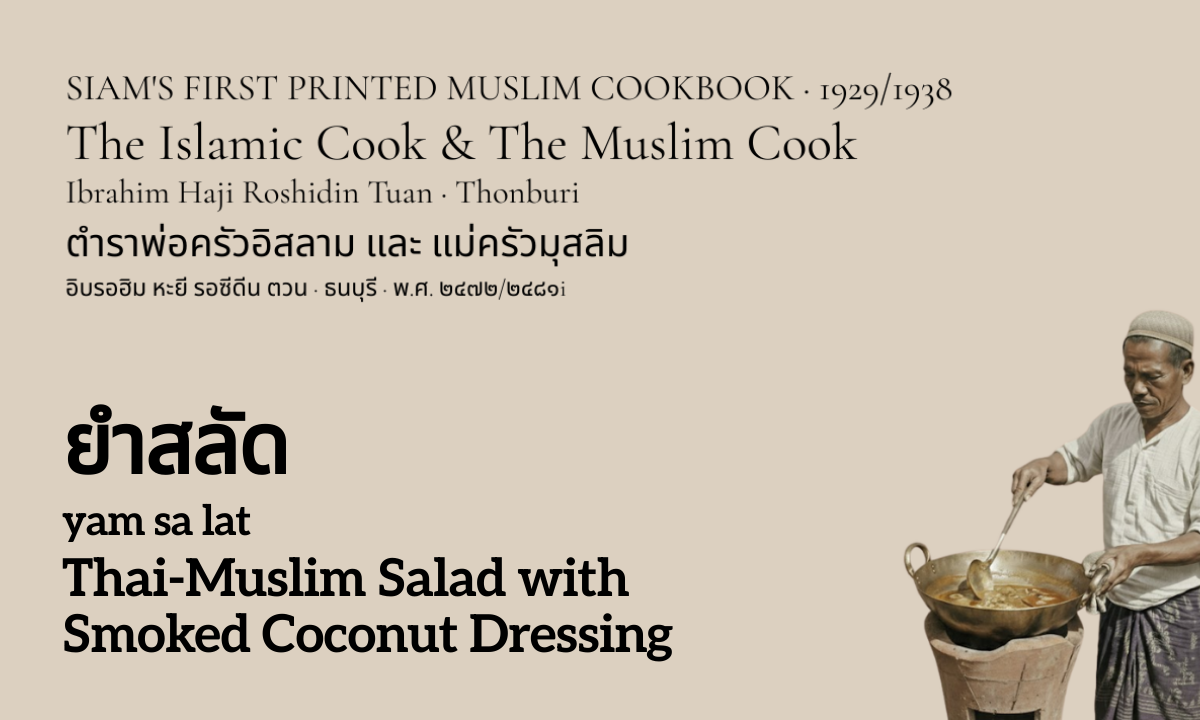
- Ibrahim Haji Roshidin Tuan, Islamic Cook (1929) and Muslim Cook (1938). The working notes of a Thonburi caterer who cooked for weddings, funerals, and any event that booked the kitchen.
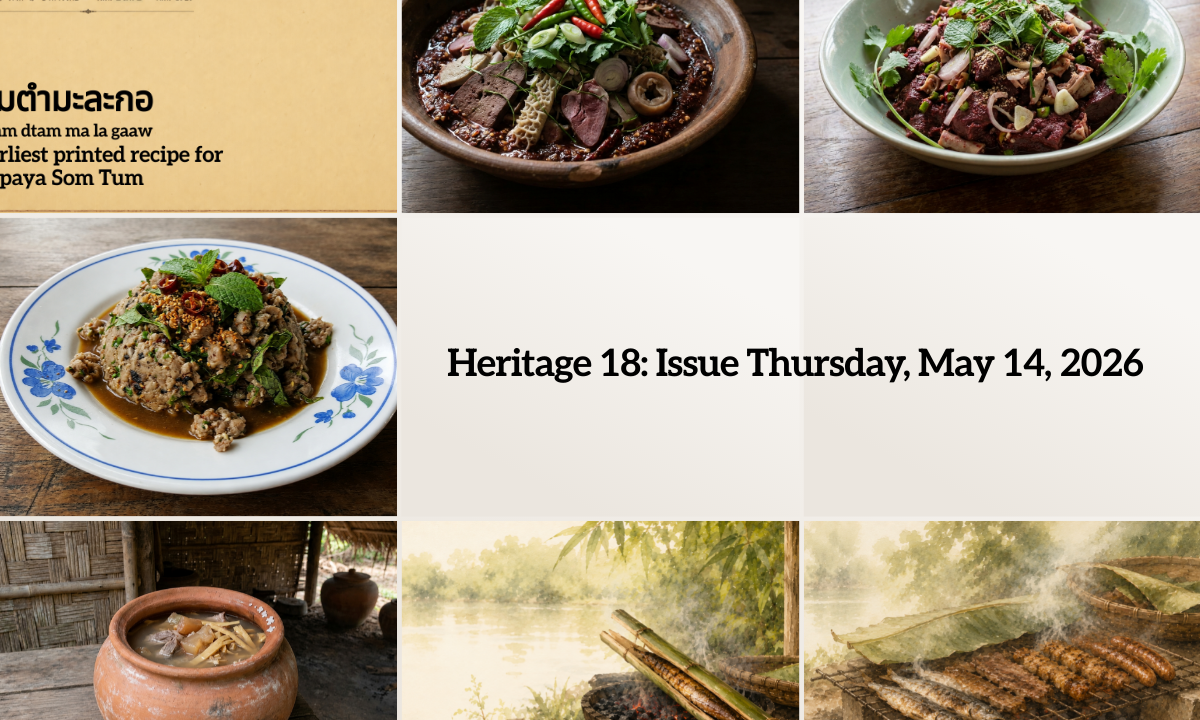
- Nor.Sor.Hor.Dor, Tamra Khraawp Lo:hk, “A Cookbook Encompassing the World” (1929). The compiler wrote under initials and planned three volumes to cover the cooking of the whole world. The first travels from the northeast to the palace, and on page 70 it prints the earliest papaya som tam we know of.
- Puang Bunnag, Recipe Collection of Lady Plean Passakornrawong: Daily Rice Recipes, 30 Sets (1931). Thirty sets of everyday meals from Lady Plean’s kitchen, written down by Puang Bunnag. We hold a selection.
- Lady Srithammarat (Pao Kanchanachot), Dtam Raa Gap Khao (1933). She taught cooking at Rajini School and published recipes in two women’s newspapers. After she died, her students went back through those papers, chose sixty-eight recipes, and printed them for her funeral.
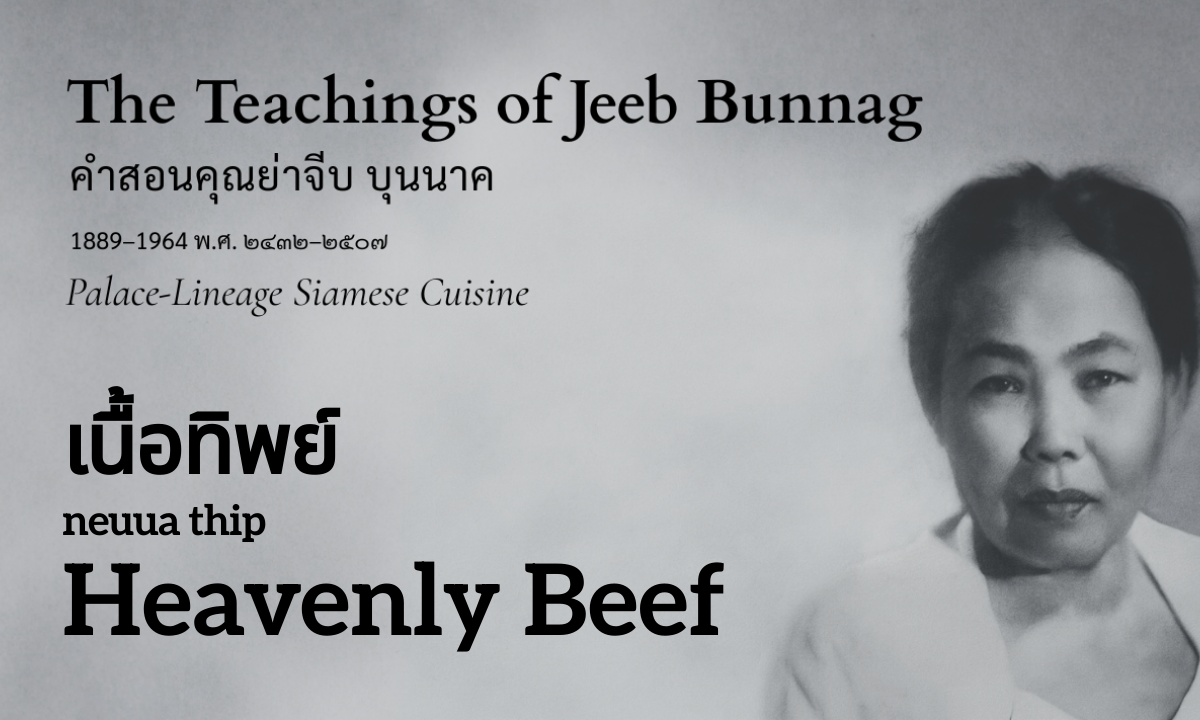
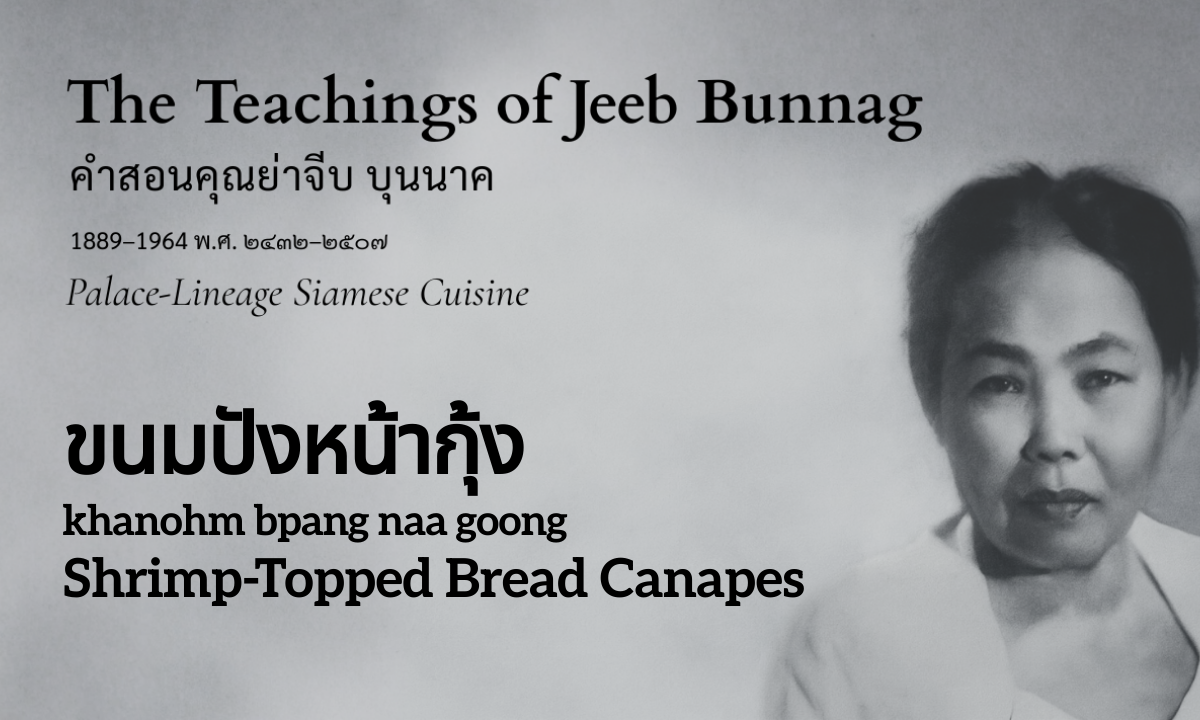
- Jeeb Bunnag (1933). Trained in the palace under Lady Plean. She printed her home address in her books so cooks could write to her.
- M.R. Tuang Sanitwong, Tamrap Sai Yaowapa (1935). Princess Yaowaphaphongsanit grew up in the household of a royal physician and had a taste for food suited to people who were ill. The cookbook written for her cremation carries a long essay on kitchen science beside the recipes.
- Gingganok Gaanjanaaphaa (1935). More than 200 dishes, not one repeated, gathered from the special cooks of the royal kitchen.
- Thanom Palaboot (1941). A schoolteacher in Maha Sarakham began collecting recipes for her own household. Her fellow teachers talked her into publishing, and the collection grew to four volumes and about 800 recipes.
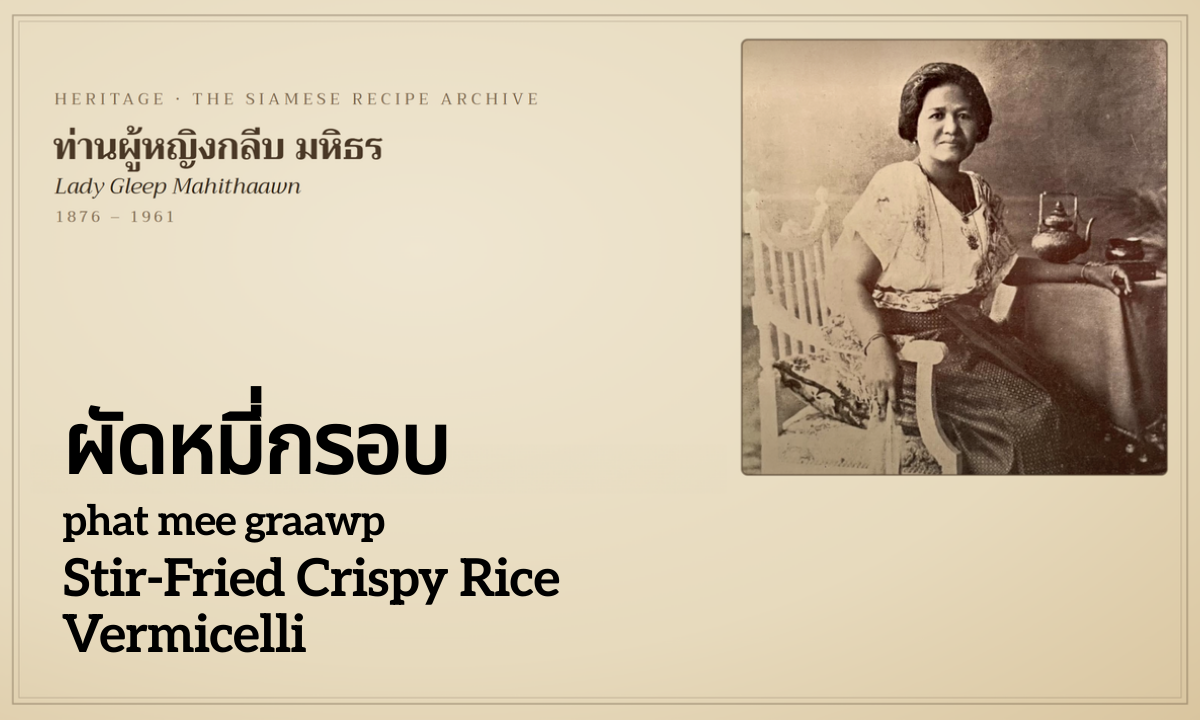
- Lady Gleep Mahithaawn, Recipes for Teaching Children and Grandchildren (1949 and 1957). Lady Gleep entered the Grand Palace at seven. In her seventies she said her recipes aloud while her grandchildren wrote them down, and the family printed the first book for her 72nd birthday. A second, on fruit, snacks, and sweets, followed in 1957.
- Mom Ying Supha, Pornthip series (1949–50). Recipes tested in the royal kitchen, with Thai, Chinese, and Western cooking across four volumes.
- Mrs. Paan Nanthaaphiwat, Rice Cooking and Curry (1953). Mrs. Paan printed this for her 60th birthday and called it a record of dishes she had cooked and found easy. It starts with how to cook rice and goes on to curries from Indian, Malay, and Chinese kitchens.
- M.R. Kitinadda Kitiyakorn, Khaawng Suay (1964). The Secretary-General of the Privy Council cooked as a hobby and wrote down what was served to King Bhumibol and Queen Sirikit by the sea in 1962 and 1963. One evening at Hua Hin, the stove was carried onto the sand so the tom yum would reach the table hot.
- Prachongchit Kuntan, Thai, Chinese and Western Food (1970). Usa Makornmanee asked her for a cookbook to hand out at her mother’s cremation, because her mother had loved food. Prachongchit gathered 143 recipes she had already cooked on television and added 120 tips for the kitchen and the house.
- Princess Jongjittanom Dissakul, Favorite Dishes (1978). King Chulalongkorn praised her chili relish. She would not publish while she was still working, and when this lifetime of recipes finally appeared in 1978, she named the person or household behind each dish.
- Memorial book culinary selections. Family recipes that survive in cremation volumes, printed for the mourners at a funeral.
Every recipe is attributed by author, date, and source manuscript. Archaic weights (chang, tamlung, baht, salueng, tanan) are converted to grams and milliliters, with the originals kept alongside. The original voice is translated as written, including the steps that read oddly today.
50+ Masterclasses
Video courses that dig into how Thai dishes are built and why they work. A few from the catalog:
- Aromatic Primer for Thai Cuisine — Part 1 (Aug 2025). Why does lemongrass added early fade away, and why does a balanced curry taste different once it cools? Part 1 starts with the body: taste receptors, smell, how we sense temperature, and how fat, starch, salt, and acid decide when an aroma reaches you.
- Patterns: Decoding the Complexity of Siamese Curry Paste. Hanuman reads a curry paste as a set of smaller “sub-pastes,” each carrying something from the people who made it: their history, their medicine, their beliefs. The patterns come from old Thai cookbooks and manuscripts, and from years of cooking.
- Aromatic Alchemy: The Art and Science of Pounded Curry Pastes. A case for the mortar and pestle. You follow what happens to oils, moisture, heat, and aroma as you pound, and learn why a hand-pounded paste tastes different from one made in a blender.
- Reflections on the Lifecycle of Heat (Green Curry; แกงเขียวหวาน). A green curry lesson in advanced flavor layering, built around what Hanuman calls “animating flavor”: keeping the pot bright and lively while its flavor deepens and matures.
- Curry Paste Permeability. There is no single perfect paste. This class teaches you to fit a paste to what you are cooking, lighter for delicate seafood and thicker for meat that can stand up to it.
- Minced-Bird Style Curries (แกงสับนก; Gaaeng Sap Nohk). Village cooks minced their small, bony catch, doves and fish among it, bones and all, and cooked it into curry so none of it went to waste. The class follows these curries from early-20th-century recipes to the kitchens of today.
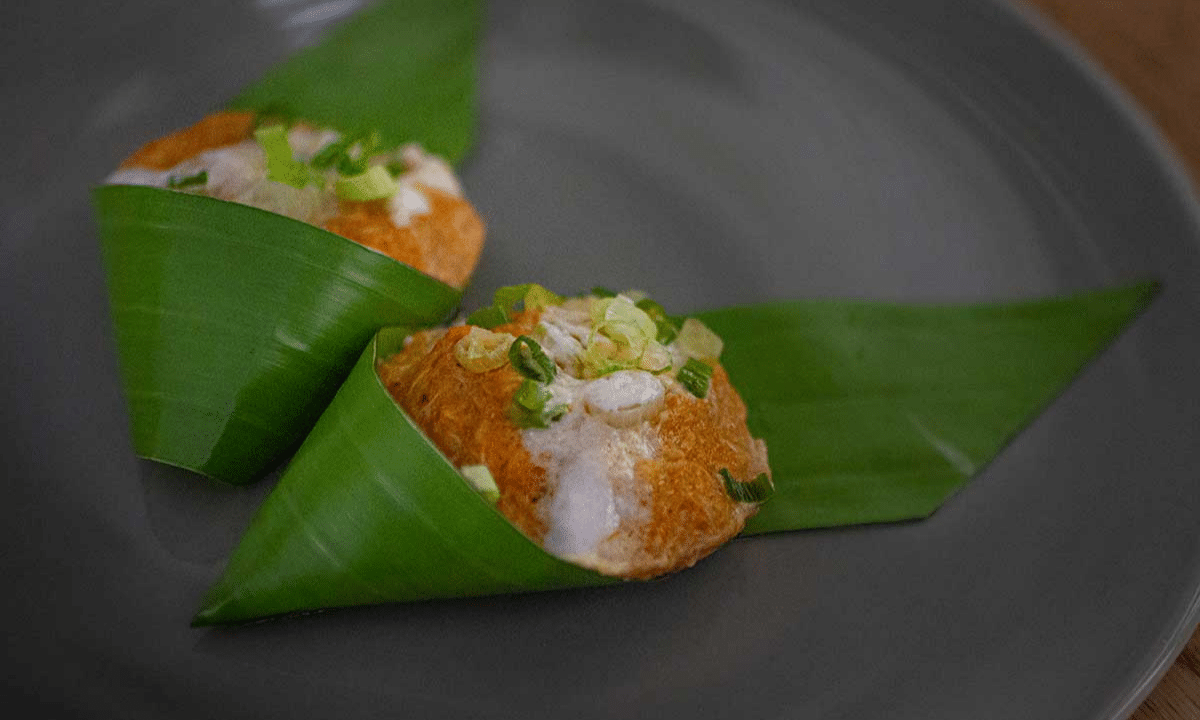
- Khaao Man Sohm Dtam (ข้าวมันส้มตำ). Hanuman traces papaya salad back to the Central Plains, where it was one part of a set meal with coconut rice, a tamarind chili relish, sweet crispy pork threads, and salted fish fried in egg batter. The class rebuilds that whole samrub from the 1935 recipe in Tamrap Sai Yaowapa.
Alongside the masterclasses sit four professional guides to build on: Siamese Chili Relishes (น้ำพริก), Thai Curries (แกงไทย), Thai Salads (เรื่องยำๆ), and The Art of Siamese Old-School Menu Design (สํารับอาหารไทย). New masterclasses are added every month.
700+ recipes
You can browse them by region, technique, source manuscript, or origin. A few from the catalog:
- Dtohm Yam Bplaa Chaawn (ต้มยำปลาช่อน). Maawm Sohm Jeen’s 1890 tom yum is far from the one most people know. The snakehead fish simmers with a pinch of rice and two stalks of lemongrass, and the roasted chili jam and shredded green mango go in at the bowl. It is the earliest published tom yum recipe in the archive.
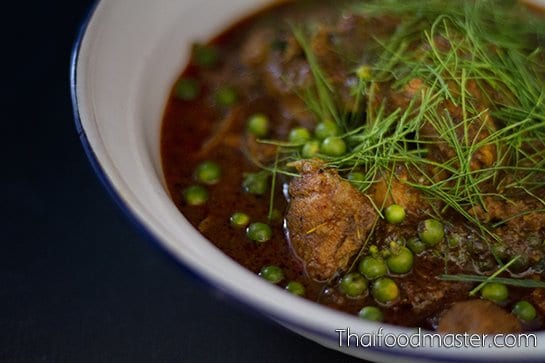
- Gaaeng Khuaa Phrik Baang Chaang (แกงคั่วพริกบางช้าง). Princess Jongjittanom Dissakul’s smoked-fish curry from Favorite Dishes (1978). The fish is pounded into a phrik khing paste and finished in coconut cream, so you taste its smoke without seeing it. She served the curry over khanom jeen with pickled garlic.
- Gaaeng Sai Graawk Muu Haaeng (แกงไส้กรอกหมูแห้ง). A 1935 coconut-cream soup with sweet Chinese sausage, lemongrass, and bruised shallots, from Tamrap Sai Yaowapa, M.R. Tuang Sanitwong’s memorial volume for Princess Yaowaphaphongsanit. Finding an everyday Chinese sausage in a palace recipe shows how far Chinese preserved meats had come by then.
- Gaaeng Khiaao (แกงเขียว). Mrs. Yim Pichaiyat Bunnag’s 1920s green curry is a Muslim-style dish, built on ghee and yogurt, with chicken liver, gizzard, and heart and a roasted spice base of cinnamon, clove, and cardamom. Her family and friends gathered it into her memorial book.
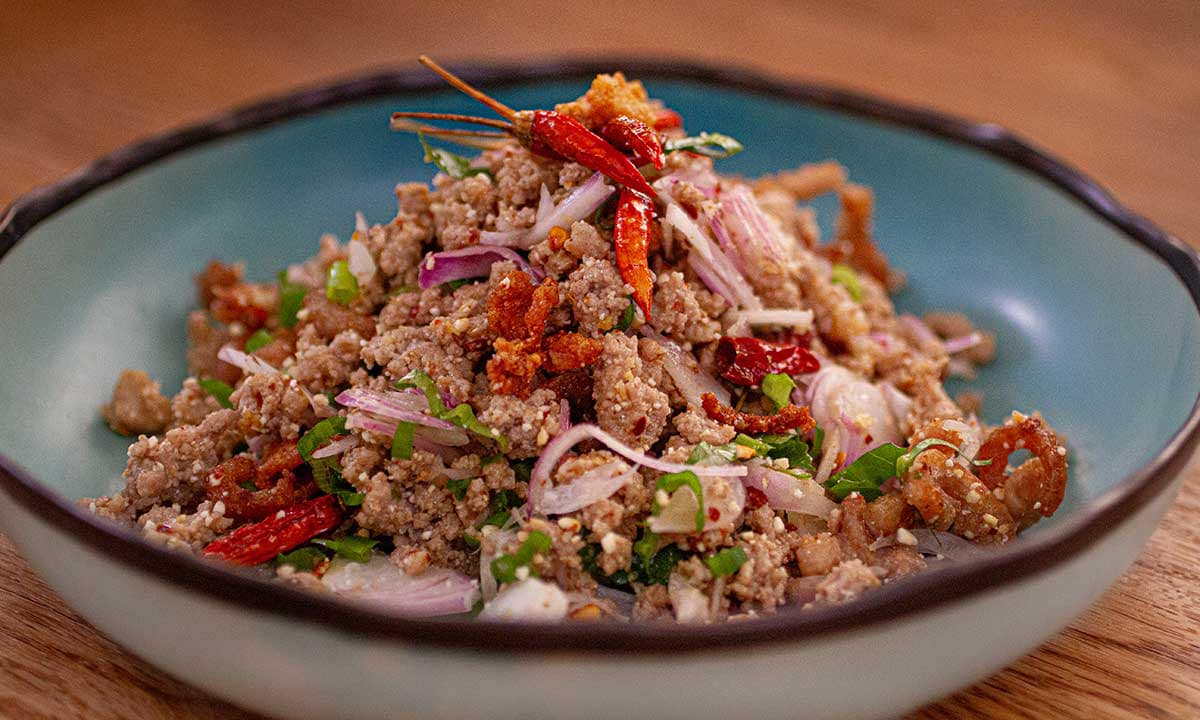
- Yam Dtreen Rohng (ยำตรีณรงค์). Three fruits and three proteins in one salad: pomelo, rose apple, and pomegranate with river shrimp, chicken, and pork, dressed sour, salty, and sweet. It comes from the c.1935 memorial cookbook of Ms. Booree Thohnsak of Pathum Thani.
- Gaaeng Mo:hng (แกงโมง). Mrs. Paan Nanthaaphiwat’s 1953 recipe for the curry of the Chonburi people. Grilled catfish is pounded into the paste with fermented shrimp paste, and the curry is cooked with young watermelon.
Every recipe comes with its Thai name, a romanization, the source it came from where we know it, and an ingredient list you can cook from.
Photo and video step-throughs
Filmed in the kitchen studio, so you can watch the work happen at the stove and the mortar. The masterclass videos and recipe walkthroughs show you:
- How a paste comes together in the mortar: which ingredient goes in when, how the oils come out, how the moisture and warmth change as you pound, and how to tell when the paste is done. (Aromatic Alchemy, Patterns.)
- What pounding does to aroma, with hand-pounded and blender-made pastes side by side at each stage so you can see the difference.
- How a paste made from dried chilies roasts, and how its color shifts in the dish.
- The “animating flavor” sequence for green curry, one step at a time. (Reflections on the Lifecycle of Heat.)
- One paste adjusted live for different meats, fish, and vegetables. (Curry Paste Permeability.)
- Technique videos across the 700+ recipes: knife work, grilling, frying, fermentation, and plating.
Articles and research
Hanuman’s longer writing, on history, technique, and the people behind the food. A few examples:
- How to Read Historical Recipes: A Four-Dimensional Approach to Siamese Culinary (Sept 2025). Old recipes can read strangely. This article shows how to read them on four levels, from the literal words to the story underneath, and how four forces shaped what a cook wrote down: what was available, what was culturally fitting, what tradition expected, and what superstition allowed.
- Chilies in Siam — Three Genomes, Four Trade Routes, One Culinary Revolution (Aug 2025). The usual story says Portuguese traders brought chilies to Southeast Asia. DNA studies of hundreds of chili plants show they also came with Islamic sea traders, over Chinese land routes, and through Indian Ocean merchants, all at the same time.
- Jeeb Bunnag — The Teacher Who Preserved a Culinary Empire (Aug 2025). The life of Mrs. Samaknantapol, born into the same Chuto clan as Lady Plean and trained under her in the palace kitchens, with a close reading of her 1933 Samrub Raawp Bpee: a full year of daily meals, 365 complete sets.
- King Chulalongkorn’s Travels and Culinary Collections from Java. King Chulalongkorn visited Java in 1871, 1896, and 1901, and Javanese dishes followed him home to the Siamese court. This series traces them and cooks them again from the manuscripts and cookbooks of the period.
- Siamese Culinary Legends of the Rattanakosin Period. Short portraits of the cooks, noblewomen, and authors who shaped bpaa ga sin (ปากะศิลป์), the Siamese culinary arts. You could call them the first Thai food influencers.
Live monthly Q&A
Two hours with Hanuman, once a month. Members submit questions in advance. Sessions are recorded and indexed for the archive.
Membership
$87 per month, or $850 per year (saves $194). Cancel in two clicks.
Join Today · Already a member? Log in
Think you’re seeing this by mistake? Contact us and we’ll sort it out.